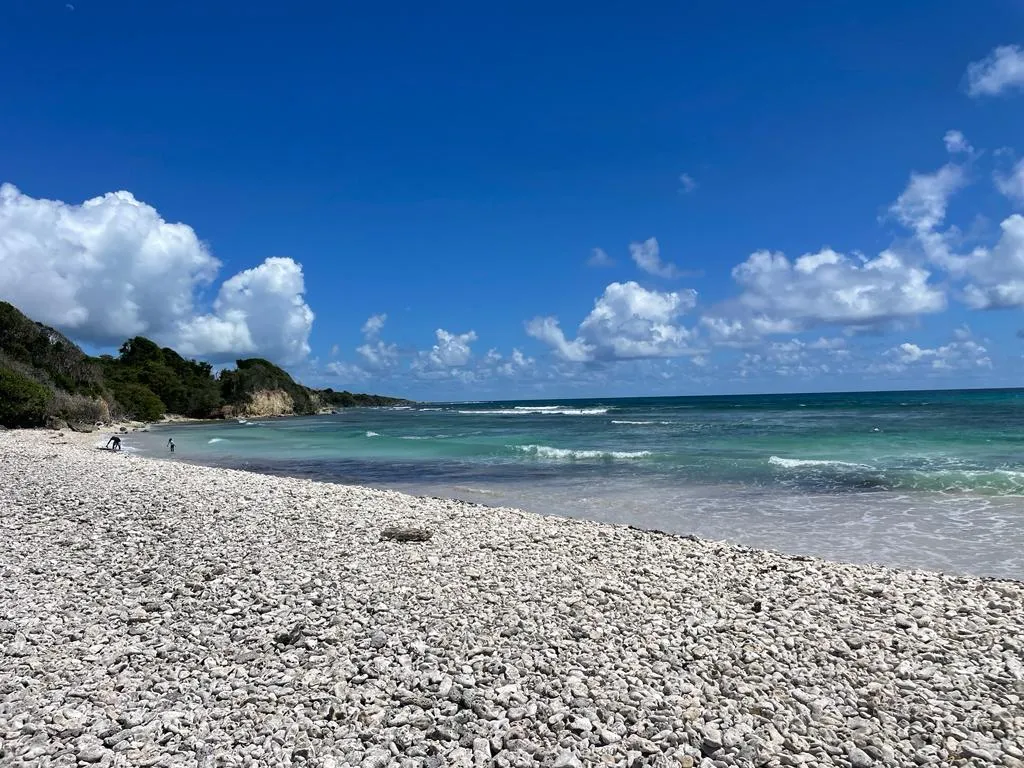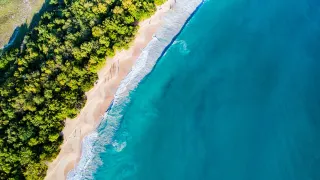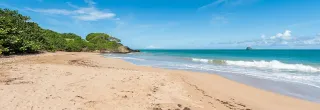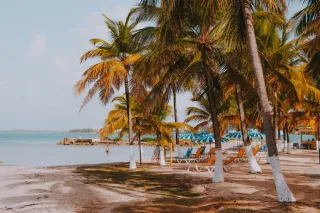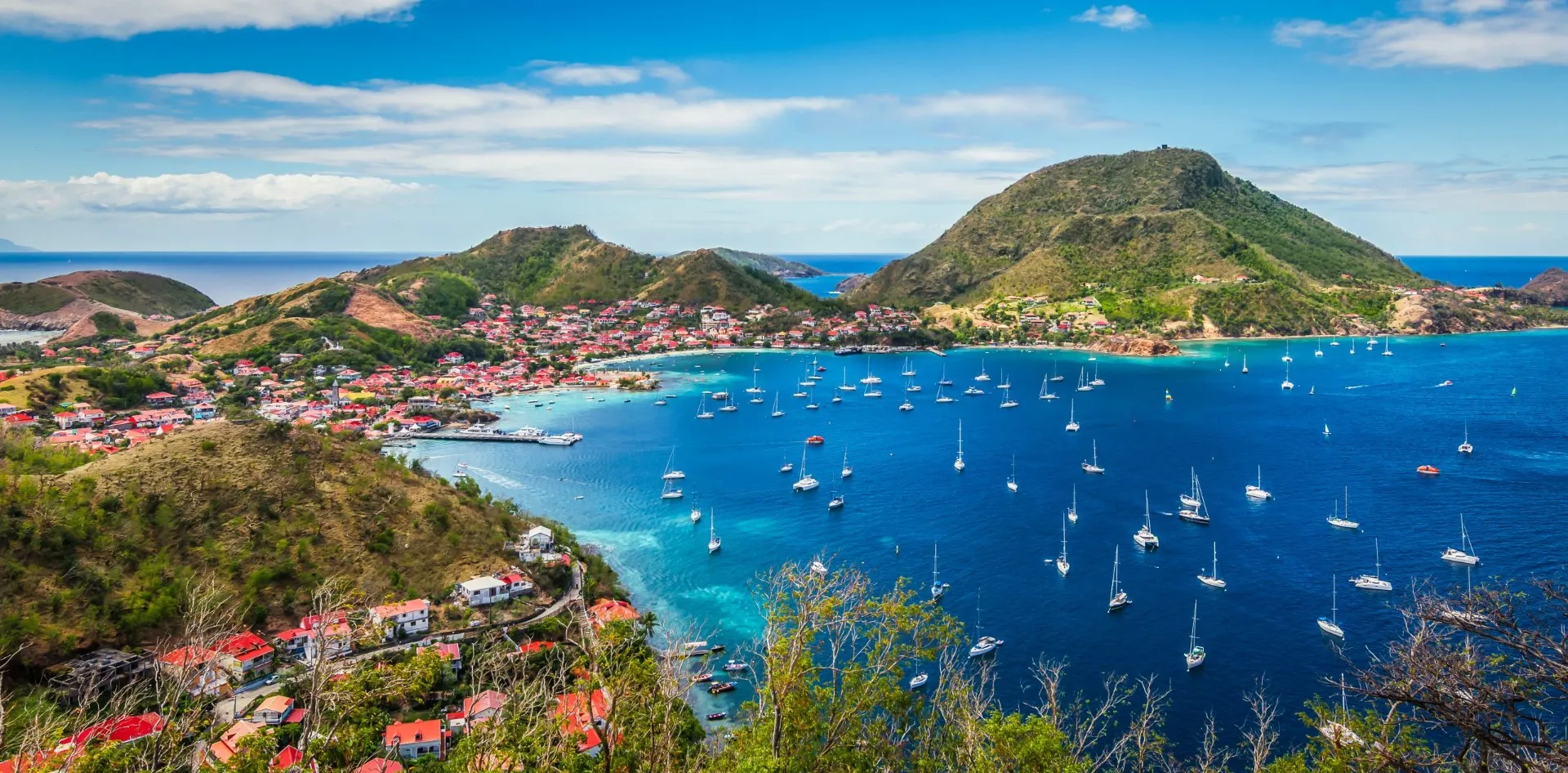
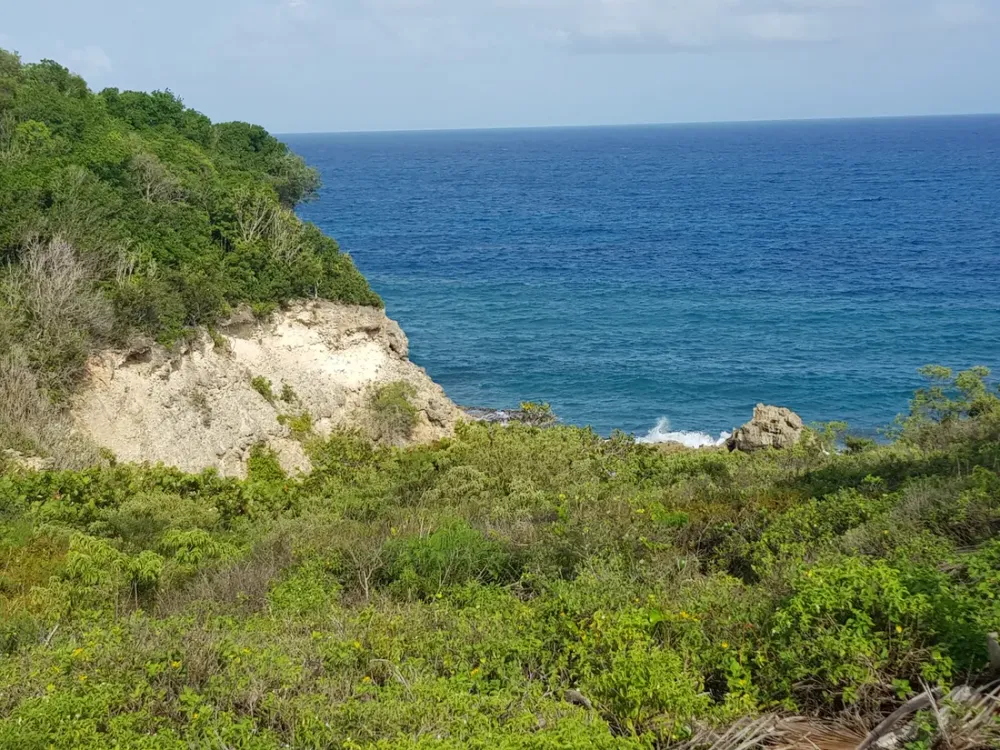
Helleux Beach in Sainte-Anne is everything the famous Caravelle is not: no rows of coconut palms staged for photos, no sheltered turquoise lagoon, no sun-lounger rentals. Here, at the eastern edge of the township, the Atlantic slams the shore head-on, and you’ll cross paths with more fishermen and regulars than tourists. After years of roaming the beaches of Grande-Terre, I can tell you: Helleux is one of the last truly wild beaches in southern Guadeloupe. It’s also one of the most demanding, and this guide explains how to enjoy it safely.
Why Helleux Beach is unlike any other beach in Sainte-Anne
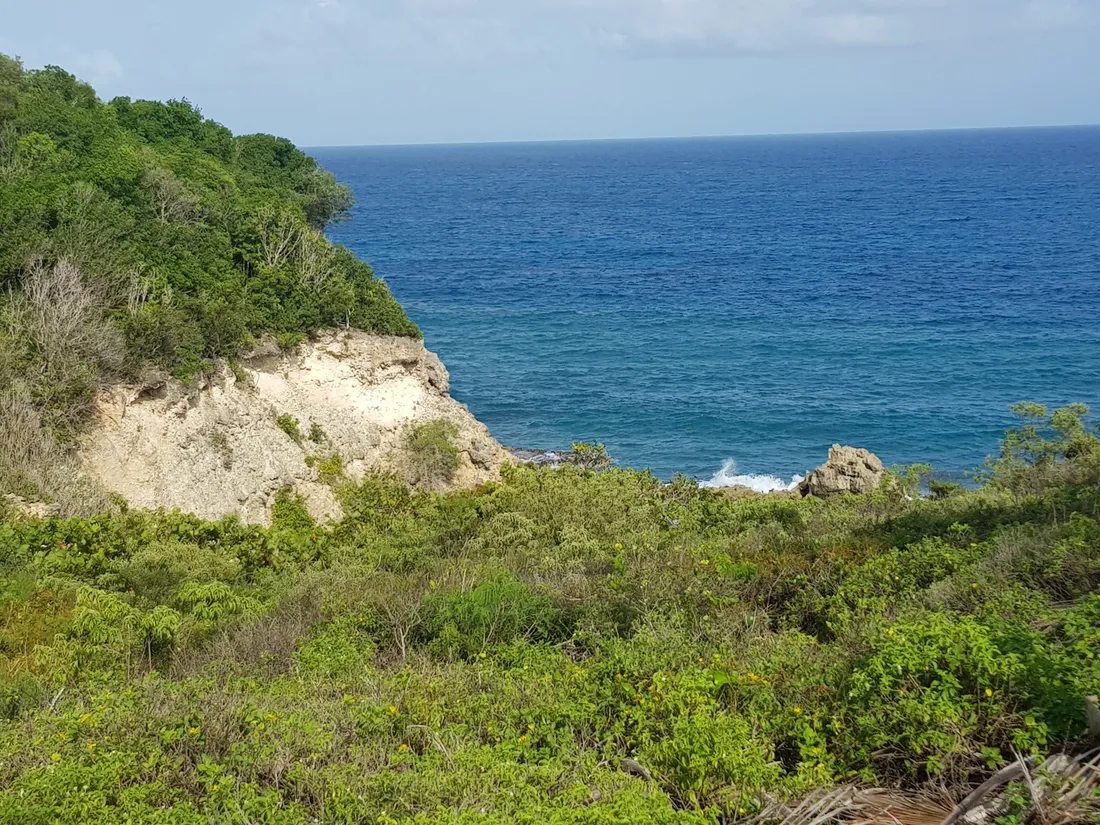
Sainte-Anne, on the limestone wing of Grande-Terre, is known for beaches protected by the coral reef: la Caravelle, le Bourg, Bois Jolan. Helleux, however, sits on a stretch of coast where the reef breaks off: the Atlantic swell arrives with almost no filter.
In practice, this means:
- A powerful shore break: the waves break directly onto the sand, sometimes more than one and a half meters high during swell periods.
- A long, deep beach of about 800 meters, fringed with sea grapes and local “poiriers-pays” trees, with no construction whatsoever on the sand.
- Very low attendance on weekdays: I once spent two hours there on a Tuesday morning in May without crossing paths with more than five people.
- A nesting site for sea turtles: between March and October, you regularly spot crawl tracks at first light.
This lack of development draws walkers, photographers, and lovers of raw nature. It also calls for genuine precautions, which we’ll come back to below.
How to reach Helleux Beach from Sainte-Anne
The route by car
Helleux is located at the locality of the same name, about 6 km east of the town of Sainte-Anne, heading toward Saint-François along the RN4 (allow 10 minutes of driving). The easiest landmark: the large holiday village set on the heights of les Galbas. Just past it, a small road then a dirt track lead down to the sea.
A few points to watch:
- The final track is unpaved: passable in a city car in dry weather, muddy after heavy rain (July to November).
- Parking is informal: you park under the trees, along the track. Don’t leave anything visible inside the vehicle.
- No tourist signage: this is deliberate. A GPS set to “Le Helleux, Sainte-Anne” is enough.
On foot from Bois Jolan
For walkers, the finest approach remains the coastal trail from Bois Jolan: about 2.5 km of shoreline path heading east, or 40 to 50 minutes on foot. Set out before 8 a.m. — shade is rare and the Grande-Terre sun is unforgiving — with at least 1.5 liters of water per person.
Currents at Helleux: a swim reserved for confident swimmers
This is THE topic to be straight about. The current at Helleux is no local legend: the beach is regularly cited as one of the most dangerous in southern Grande-Terre, and drownings have occurred there.
Understanding the danger
- Rip currents (baïnes): water pushed in by the waves flows back out to sea through channels invisible from the shore. An average swimmer cannot fight against them.
- Shore break: the wave that slaps directly onto the sand can knock an adult off balance and throw a child.
- No lifeguard station: no supervision, no buoys, and not always a decent phone signal on the beach (112 remains reachable higher up, toward the track).
The rules I apply myself
- I never swim alone at Helleux, and never beyond the zone where I can stand.
- During strong swell (frequent from December to March with the trade winds), I limit myself to walking with my feet in the water.
- If a current carries me off: don’t fight back toward the beach, swim parallel to the shore to get out of the channel, then return diagonally.
- Children play on the sand, full stop. For a family swim, la Caravelle or Bois Jolan are infinitely better suited.
Even on calm summer days, beware of appearances: the absence of waves does not mean the absence of current.
A wild beach in Sainte-Anne, between discreet naturism and sea turtles
Helleux is known to regulars as one of the rare naturist bathing spots in Guadeloupe — an unofficial tolerance, not an official status. The practice is concentrated on the part farthest from the main access, toward the east, in a discreet and respectful atmosphere. If you’re not into it, stay on the first half of the beach: everyone coexists without any problem. Simply avoid taking photos in the direction of other beachgoers.
The other treasure of the place is the hawksbill and green turtles that come to lay their eggs on this preserved sand. If you spot tracks or an emergence: keep at least 10 meters away, no lamp or flash at night, and don’t touch nests or baby turtles — protected species, with fines that can reach 150,000 €.