You’ve probably already been told: to make the most of Martinique, a car is all but essential. That’s true. But what people rarely tell you is what daily life behind the wheel actually looks like on an island 80 km long, where 360,000 inhabitants are concentrated around the same bay. Driving in Martinique isn’t technically complicated: you drive on the right, the rules are the same as in mainland France, and fuel is paid for in euros. The real challenge is timing. A 25 km drive can take 30 minutes at 6 a.m. and 1h30 at 5 p.m. Here, straight from the ground, is everything you need to know so you don’t spend your holiday stuck in traffic.
Fort-de-France Traffic Jams: The Real Constraint
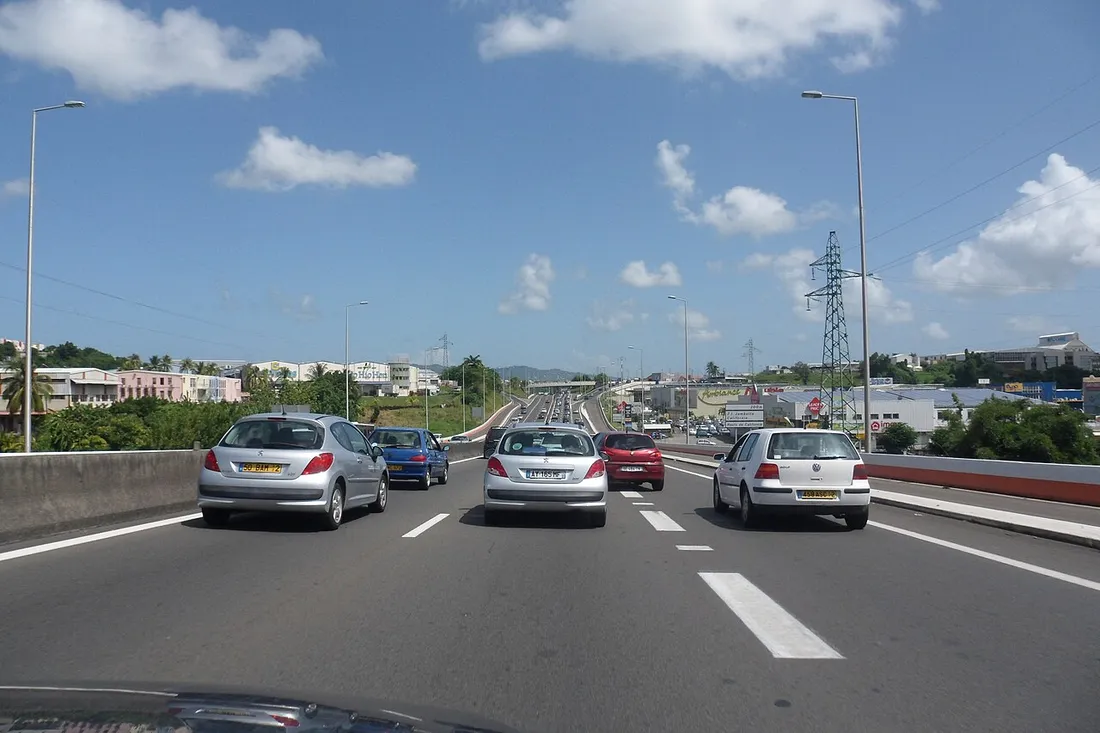
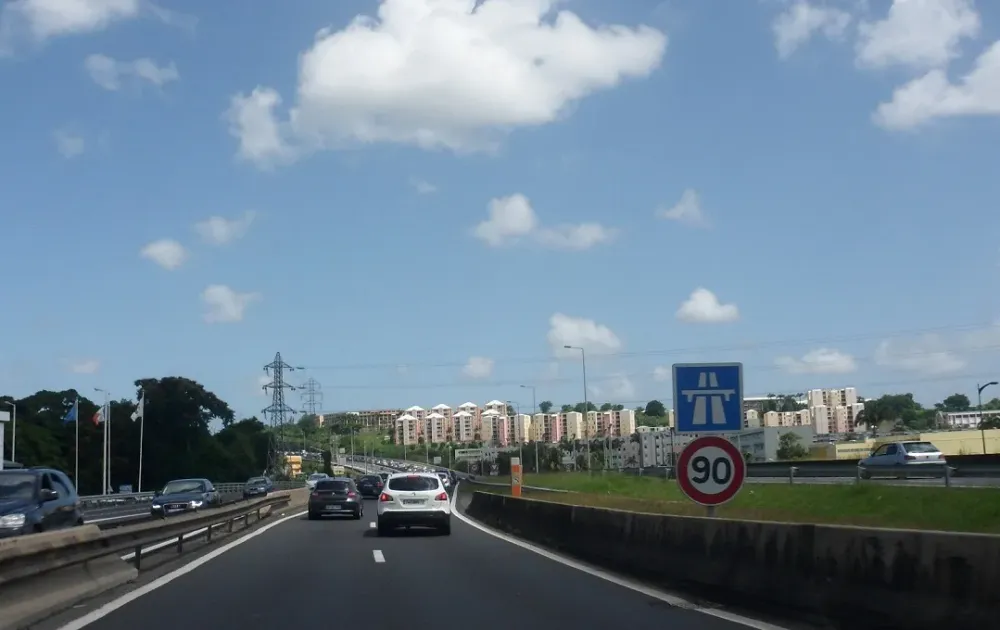
If there’s one thing to remember, it’s this. The absolute black spot is the traffic jams of Fort-de-France and its urban area (Le Lamentin, Schoelcher, Ducos). All of the island’s economic activity converges on the bay, and the main routes — the ring road and the motorway linking the airport to the capital — get saturated morning and evening.
In practice, here are the time slots to avoid:
- Mornings from 6:30 to 8:30 : the toughest rush hour, when everyone heads into Fort-de-France.
- Evenings from 4 to 6:30 p.m. : the outflow. The ring road can be completely frozen, especially heading from the capital toward the South.
- Wednesday lunchtime : a no-school day for many, so traffic intensifies.
My local tip: cross the urban area against the flow or in the middle of the day. If you’re staying in the South and visiting the North, leave before 7 a.m. or after 9:30: you’ll easily save 45 minutes. And never count on 20 minutes to return your car at the airport on a Friday evening — allow double.
The Ferry Trick to Skip the Traffic
To reach Fort-de-France from Les Trois-Îlets or Pointe du Bout, there’s a brilliant workaround: the maritime shuttle. The boats cross the bay in about twenty minutes, while the road loops all the way around the back of it and can take more than an hour at peak times. Reckon on 7 to 8 € one way: if you’re staying on the Trois-Îlets side, it’s the best way to visit the capital without a parking nightmare.
The State of the Roads in Martinique: From Excellent to Very Narrow
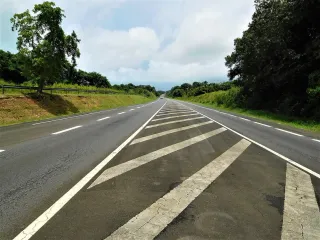
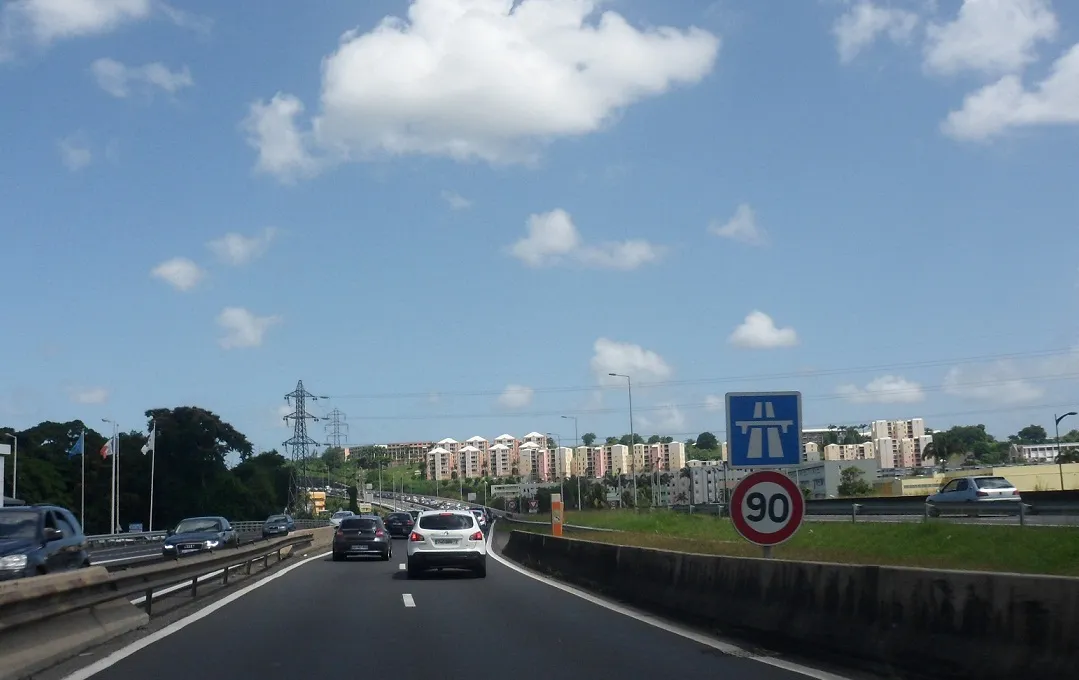
Overall, the state of the roads in Martinique is far better than some imagine. The main network (the N1, N5 and N6 departmental roads and the motorway) is well maintained, wide and signposted. But the island has two faces behind the wheel.
The South and the Centre: wide, smooth, easy roads, even for an inexperienced driver. Distances are short: Fort-de-France to Sainte-Anne is about 40 km for 45 minutes to an hour outside of traffic.
The North: that’s another story, and this is where many visitors get caught out. The mountain roads around Montagne Pelée, Saint-Pierre or toward Grand-Rivière are narrow, winding and steep: hairpin bends, one-and-a-half-lane stretches, and vegetation that cuts down visibility.
A few reflexes for the North:
- Drive at a moderate pace : a vehicle may appear in a blind bend, where people give a brief beep of the horn (a local custom, not aggression).
- Watch out for rain : the North is the wettest part of the island, and a wet road under the canopy turns slippery.
- Beware of nighttime : little or no lighting outside built-up areas, and night falls early in the tropics (around 6 to 6:30 p.m. year-round). Avoid mountain roads after dark.
Two last points: in town, motorbikes filter between lanes, so keep an eye on your mirrors; and fill up before heading deep into the North, where petrol stations become scarce beyond Saint-Pierre.
Parking at the Beaches: The Other Headache
Parking is the second subject that comes up constantly at the concierge desk, after traffic. Parking at Martinique’s beaches has to be earned, especially on weekends and at popular spots.
Les Salines: Arrive Early or Give Up
Grande Anse des Salines, in Sainte-Anne, is the island’s most iconic beach, and therefore the most sought-after. The car park is free and shaded, but it fills up very fast: on Sundays, Martinican families arrive to picnic from late morning onward.
The golden rule at Les Salines:
- Arrive before 9:30 on weekdays, even earlier on weekends. After 11 a.m. on a Sunday, you’ll circle for a long time before finding a spot.
- Never leave valuables visible in the car: true everywhere, but especially in isolated beach car parks.
- Leave before the big rush, or after 4 p.m. when the weekend crowd disperses.
The Other Beaches and Tourist Sites
- Anse Dufour and Anse Noire (Les Anses-d’Arlet): a small car park at the top, quickly full. You park along the road, then walk down a flight of steps. Arrive early.
- Plage du Diamant: easier parking along the road, but the village fills up fast.
- Les Trois-Îlets, Pointe du Bout: parking is available, but look early in high season.
- Fort-de-France: paid parking in the town centre (ticket machines), spots scarce during the day. Favour covered car parks or the maritime shuttle from Les Trois-Îlets.