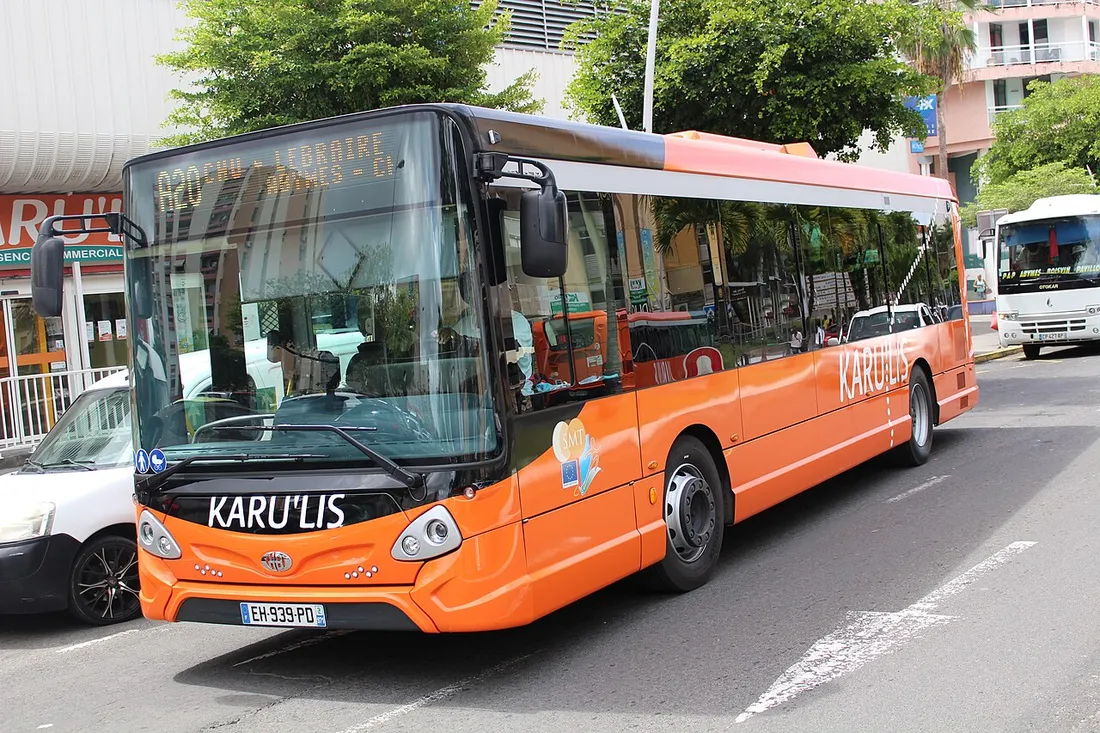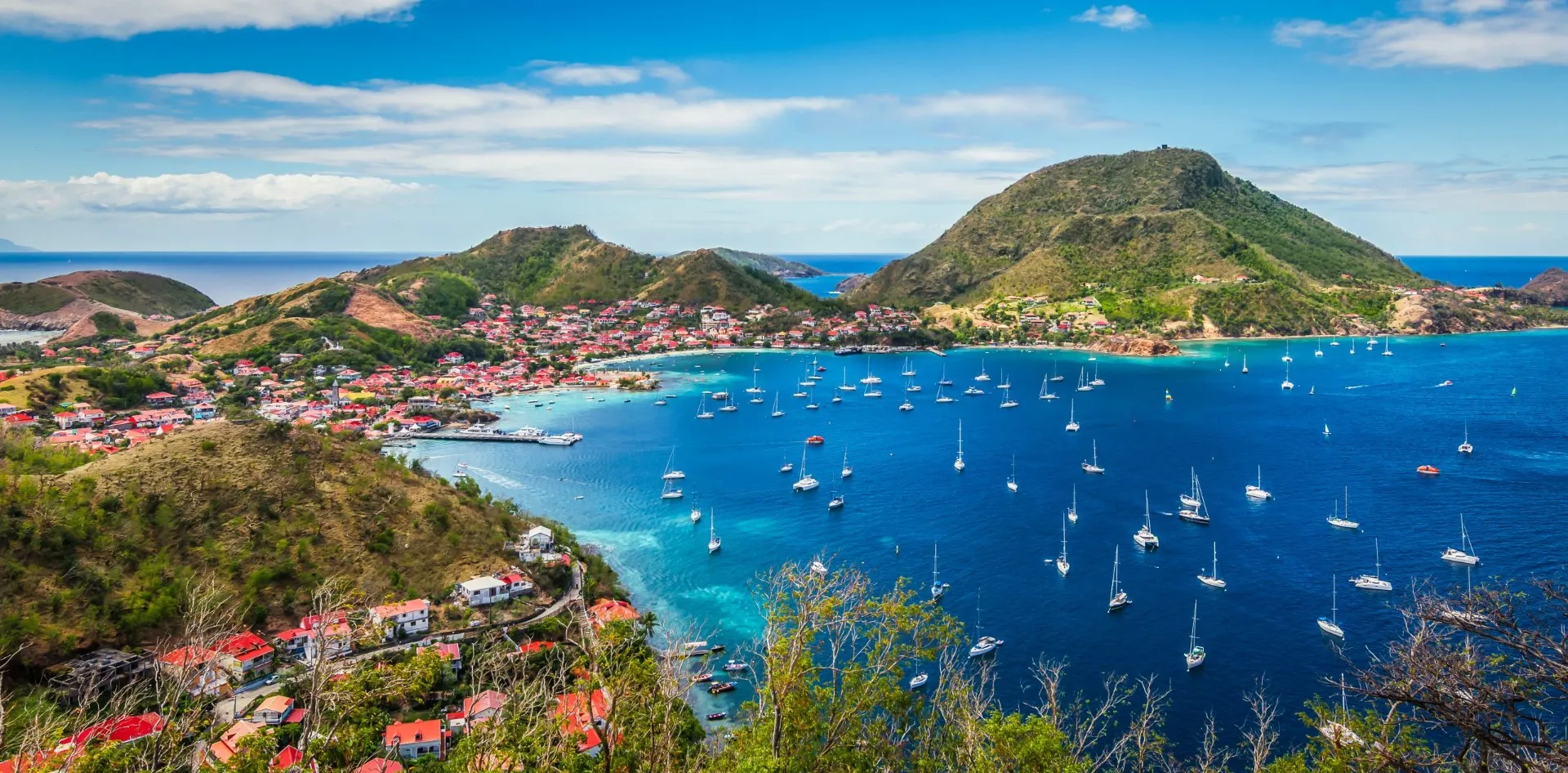
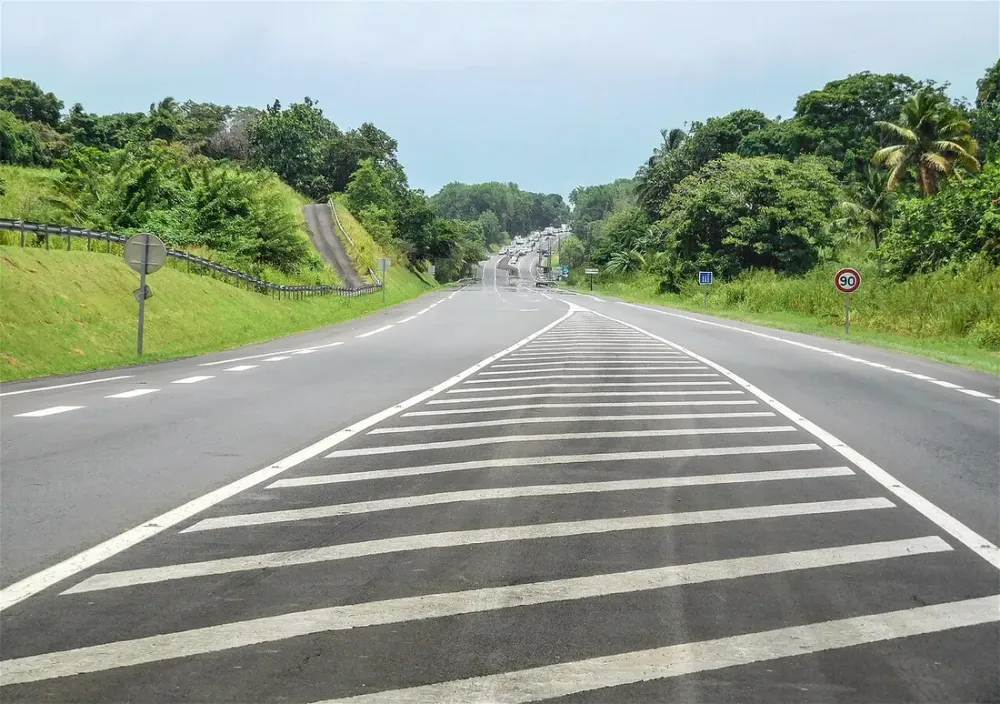
The question comes up in almost every WhatsApp message from our travelers: do you really need to rent a car? After years of living here, my honest answer is: it depends on your area and your itinerary. Transport in Guadeloupe has improved with the Karu’lis network, but this butterfly-shaped archipelago is still a 1,600 km² territory where some sites can only be reached by car. Here’s a ground-level overview, area by area.
Transport in Guadeloupe: the real situation in 2026
Guadeloupe is home to around 380,000 people spread across two very different wings: Grande-Terre (turquoise beaches, the seaside resorts of Sainte-Anne, Saint-François and Le Gosier) and Basse-Terre (the Soufrière volcano at 1,467 m, the Carbet Falls, the National Park’s rainforest). Pôle Caraïbes airport, near Pointe-à-Pitre, is the gateway for nearly every stay.
Three realities to know:
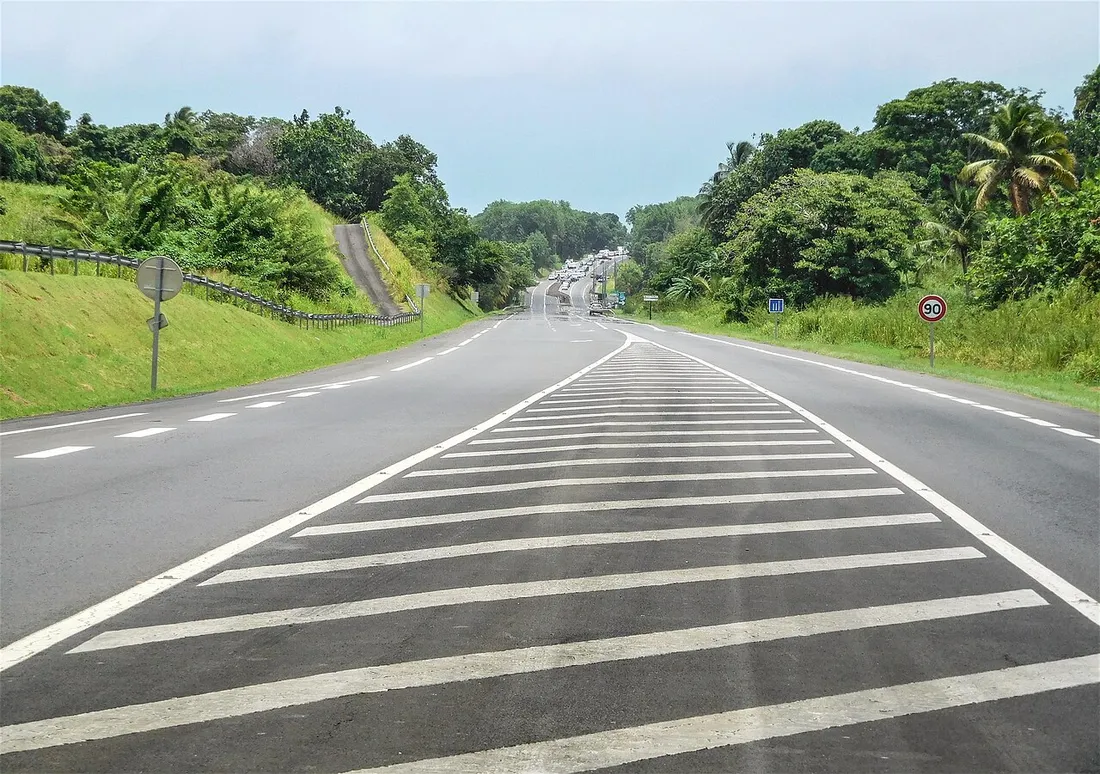
- There is no train or tram. The road network is decent on the main routes (N1, N4, N2), but the traffic jams around Pointe-à-Pitre between 6:30 and 8:30 a.m., then 4 and 6:30 p.m., are a daily occurrence.
- Distances are deceptive. The 45 km between Pointe-à-Pitre and Deshaies rarely take less than 1h15, thanks to the winding leeward-coast road.
- Public transport really does exist, contrary to what you sometimes read, but it mainly serves population centers, not isolated natural sites.
Buses in Guadeloupe: how good is the Karu’lis network?
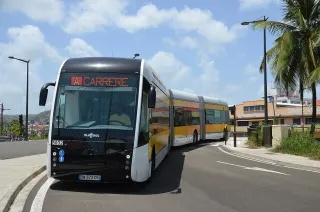
The Karu’lis network organizes the buses of the central conurbation (Pointe-à-Pitre, Les Abymes, Baie-Mahault, Le Gosier), and several intercity lines round out the coverage toward Sainte-Anne, Saint-François and the Basse-Terre coast.
What works well
- The price: expect around €1.50 for an urban trip, and €2 to €4 for longer connections. For a couple without a packed itinerary, it’s unbeatable next to the €30 to €45 a day of a car rental.
- The coastal routes of southern Grande-Terre: the Pointe-à-Pitre – Le Gosier – Sainte-Anne – Saint-François link runs along the N4 and serves the towns where beaches and shops are concentrated.
- Rush hours: decent frequencies in the morning and late afternoon on weekdays.
The limits to keep in mind
- On Sundays and public holidays, service is heavily reduced, sometimes nonexistent depending on the line. And that’s precisely the day you’ll want to go to the beach.
- After 6 or 7 p.m., don’t count on the bus to get home from a restaurant.
- Natural sites are not served: no bus to the Pointe des Châteaux, the trailhead for the Soufrière at Saint-Claude, or the Carbet Falls. The bus takes you to the town, not to the trail.
- Timetables remain indicative: leave a margin, especially to catch a sea shuttle.
Resident’s verdict: the Karu’lis bus is a genuinely useful backup tool for a relaxed stay in Le Gosier or Sainte-Anne, not a standalone solution for exploring the archipelago.
Getting around Guadeloupe without a car: the alternatives that work
Getting around Guadeloupe without a car is entirely possible if you cleverly combine several modes. Here are the ones our travelers actually use.
Taxis in Guadeloupe: handy but to be used sparingly
Guadeloupe taxis work well for one-off transfers, less so for daily use:
- Pôle Caraïbes airport → Le Gosier: €25 to €35 depending on the time (50% surcharge at night, on Sundays and public holidays).
- Airport → Sainte-Anne: €50 to €65.
- Airport → Deshaies: often €90 to €110, which changes the math compared with a rental car.
Book by phone (country code +590): outside the airport and ferry terminals, you’ll hardly find a taxi cruising for fares. Ride-hailing (VTC) services are growing around the Pointe-à-Pitre conurbation, at rates close to taxis.
Scooters and e-bikes: perfect for a single area
- 125cc scooter: €35 to €45 a day from rental shops in Sainte-Anne, Saint-François or Le Gosier. Ideal for ranging over 15-20 km: Caravelle beach, Bois Jolan, local markets. Avoid the N1 at rush hour and the crossing to Basse-Terre, though: heavy traffic and tropical downpours are unforgiving on two wheels.
- E-bike: €20 to €30 a day. The relatively flat south of Grande-Terre lends itself well to it; reckon on 14 km between Sainte-Anne and Saint-François along the coast. Set off early: after 10 a.m. the sun beats down hard, even in the dry season (December to April).
Sea shuttles: the archipelago’s trump card
This is THE reflex to have: for Les Saintes, Marie-Galante or La Désirade, a car is useless.
- Les Saintes: departures from Trois-Rivières (20-25 min crossing, around €25-30 round trip per adult) or from Pointe-à-Pitre. On Terre-de-Haut, everything is done on foot, by scooter (around €30/day) or by electric golf cart.
- Marie-Galante: daily departures from Pointe-à-Pitre, roughly 45 min to 1 hour at sea, €40 to €50 round trip. Once there, rent a scooter or car by the day to link the Bielle, Bellevue and Père Labat distilleries.
- Petite-Terre and La Désirade: excursions and shuttles departing from Saint-François.
Organized excursions with transport included
For the Soufrière, the Carbet Falls or the Cousteau Reserve at Malendure, almost all operators offer pickup at your accommodation (€70 to €110 for a guided day, transport included). Two or three excursions over the week often work out cheaper than a continuous rental with fuel and parking.