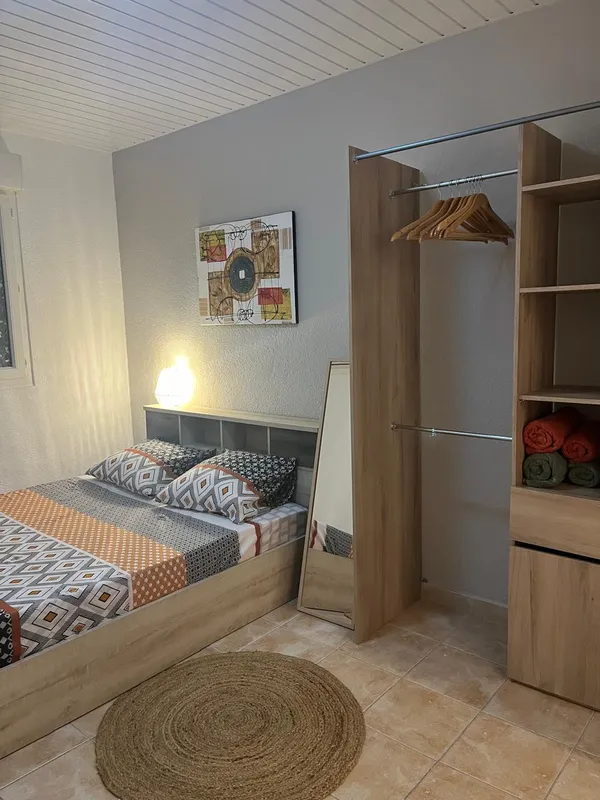

In French Guiana, any company that regularly sends staff to Cayenne, Kourou, Rémire-Montjoly or Saint-Laurent-du-Maroni quickly runs into the same constraints: finding reliable accommodation, obtaining an invoice in the company’s name, paying by bank transfer and filing an expense claim that sails through the accounts department without a single question. Booking each assignment one at a time on a consumer platform becomes time-consuming and rarely optimal, both budget-wise and in terms of administrative compliance. A housing framework agreement answers precisely this need: a single contract, negotiated once, that governs all your teams’ business stays over the year, with stable pricing and administrative terms. This article explains what a framework agreement is, why it is particularly well suited to the French Guiana context, and how to put one in place in practical terms with a serviced-accommodation provider.
What is a corporate housing framework agreement?
A framework agreement is a contract signed between your company and an accommodation provider, setting out in advance the terms applicable to all future stays, with no need to renegotiate each booking. It is not about reserving a specific property for a specific date, but about establishing a framework: rates, minimum length of stay, cancellation terms, invoicing and payment methods, dedicated contact person.
In practical terms, once the agreement is in place, each new assignment simply becomes a booking request that automatically falls under the terms already approved. The employee or executive assistant only has to specify the dates and the number of people; invoicing, rate and payment method are already settled.
Framework agreement, serviced accommodation and traditional hotels: the differences
There are three main options for housing employees on assignment:
- The traditional hotel: easy to book, but often expensive over time, with no kitchen or workspace, and poorly suited to assignments lasting several weeks.
- Consumer holiday rentals: sometimes attractive rates, but invoicing in a private individual’s name, no recoverable VAT and limited reliability for recurring professional use.
- Serviced accommodation under a framework agreement: furnished housing with services (linen, cleaning, check-in), an invoice in the company’s name, payment by bank transfer and terms negotiated for the long run.
It is this third route that combines the comfort of a self-contained home with the administrative rigour a company expects.

Why a framework agreement makes sense in French Guiana
French Guiana has specific features that make framework agreements particularly useful for the organisations operating there.
First, economic activity is concentrated in a handful of hubs. Cayenne and its urban area (Rémire-Montjoly, Matoury) host the public administration, services and a large share of the business community. Kourou lives to the rhythm of the Guiana Space Centre and its many subcontractors, with peaks in activity during launch campaigns. Saint-Laurent-du-Maroni, in the west, concentrates needs linked to the healthcare and social care sector, local authorities and construction. These professional flows are regular across the year but irregular in their timing, which argues for a stable framework rather than one-off bookings.
Second, the local hotel supply is limited and comes under serious strain during periods of high activity: launch campaigns in Kourou, government missions, events. Securing accommodation in advance, at a known rate, avoids unpleasant surprises in both availability and price.
Finally, the distances and the equatorial climate call for comfortable, air-conditioned accommodation close to the assignment site, where an employee can stay several weeks in good conditions rather than stringing together hotel nights.
Needs by sector
- Space and industry (Kourou): technical assignments lasting from a few days to several months, often in teams.
- Healthcare and social care (Cayenne, Saint-Laurent): locum cover, medical temping, long assignments.
- Construction and public works: sites with teams housed for the duration.
- Public administration and audit: occasional but repeated travel throughout the year.
The serviced-accommodation edge: invoicing, VAT and expense claims
This is the heart of the matter for a finance manager. Professional serviced accommodation offers administrative guarantees that a peer-to-peer rental simply cannot provide.
An invoice in the company’s name
Each stay generates an invoice issued in your company’s name, with the required legal details: company name, address, SIREN/SIRET number, breakdown of services and dates. This is the document that allows the expense to be booked properly and the cash outflow to be justified. No more platform receipts in a private individual’s name that are hard to get accepted by accounting.
VAT on business accommodation
Serviced accommodation falls under a VAT regime, unlike unfurnished or standard furnished rentals. As a guide, serviced accommodation is subject to a reduced VAT rate on the housing service. Depending on your situation and your company’s activity, this VAT may, under ordinary law, give rise to a right of recovery. It is important to check this with your accountant, as the rules depend on the use and on the company’s tax regime. This point can represent significant savings compared with accommodation supplied without an invoice or VAT.
An expense claim that goes through without friction
For an employee on assignment, the expense claim is often a source of stress: missing receipt, disputed amount, non-compliant format. With a framework agreement and corporate invoicing:
- The supporting document is a genuine invoice, not just a confirmation email.
- The amount matches the negotiated rate, known in advance.
- Payment can be centralised (company bank transfer) rather than advanced by the employee.
The result: fewer out-of-pocket advances, less back-and-forth with accounting and clear budget tracking by assignment or by project.
Bank transfer and long stays: how it works in practice
The framework agreement moves you away from paying by card on every booking, which fits poorly with corporate processes.
Bank transfer as the main payment method
Payment by bank transfer is the standard most finance departments expect: traceability, straightforward bank reconciliation, compliance with internal procedures. Depending on volume and the level of trust established, several arrangements are possible:
- Payment on booking for one-off stays.
- Monthly invoicing covering all the month’s nights for companies with a steady flow.
- Deposit then balance for long assignments.
Rates that taper with length of stay
The longer the stay, the lower the cost per night. As a guide, and depending on the season and periods of high local activity, long-stay rates (weekly or monthly) sit well below the equivalent in hotel nights. These ranges need to be confirmed case by case according to the period, the property and the volume committed: no rate or return can be guaranteed sight unseen, but a framework agreement is precisely what allows these terms to be locked in ahead of time.
An illustration of the budget logic
For a four-week assignment in Cayenne or Kourou, compare:
- The cumulative cost of 28 hotel nights, often the highest, with no kitchen or living space.
- The monthly rate for a furnished serviced apartment, generally more advantageous over that period and including a genuine living space.
The framework agreement turns this comparison into a stable rule: you know the typical monthly cost in advance, which makes budgeting assignments far easier.