You run a civil engineering, public works or finishing trades company, and you have just won a contract in French Guiana. Very quickly, one question becomes as critical as equipment logistics: where do you house your workers, site managers and temporary staff for several weeks, or even several months? French Guiana is home to major projects — space infrastructure in Kourou, road and utility works, public and private buildings in Cayenne, development schemes in western Guiana around Saint-Laurent-du-Maroni — yet its accommodation supply remains tight and often ill-suited to a company’s needs.
Housing a crew on a long-term site is not the same as booking a hotel room for two nights. It is a recurring cost line, a matter of comfort and recovery for your teams, and above all an accounting item that must be beyond reproach: an invoice in the company’s name, recoverable VAT where applicable, payment by bank transfer, and compliant supporting documents for expense claims and contract tracking. This is precisely where para-hotel accommodation makes the difference compared with a private peer-to-peer rental. This guide sets out the facts on local realities and on what you need to check before signing.
Why housing a construction crew is a genuine headache in French Guiana
French Guiana is unlike other territories when it comes to professional accommodation. Several structural constraints stack up.
- A limited hotel supply that fills up fast. Hotels are concentrated in Cayenne, Rémire-Montjoly, Matoury and Kourou. As soon as an event occurs (a launch campaign at the Space Centre, a mission, a conference, a peak activity period), availability evaporates and rates climb.
- Demanding distances and road network. Between Cayenne and Saint-Laurent-du-Maroni, allow around 250 km via the RN1, meaning several hours of driving. Staying far from the site wastes productive time every day and wears out the crews.
- An equatorial climate. Heat, humidity and the rainy season (roughly December to July, as a rough guide) make accommodation quality — air conditioning, ventilation, insulation — decisive for your workers’ recovery.
- The administrative headache. Many private holiday rentals do not issue an invoice that works for accounting purposes, refuse bank transfers, or cannot invoice in the company’s name. For a business, that is a deal-breaker.
The result: site managers often cobble together makeshift solutions (scattered rooms, guesthouses with no invoice, informal subletting) that prove costly in time, comfort and accounting risk.
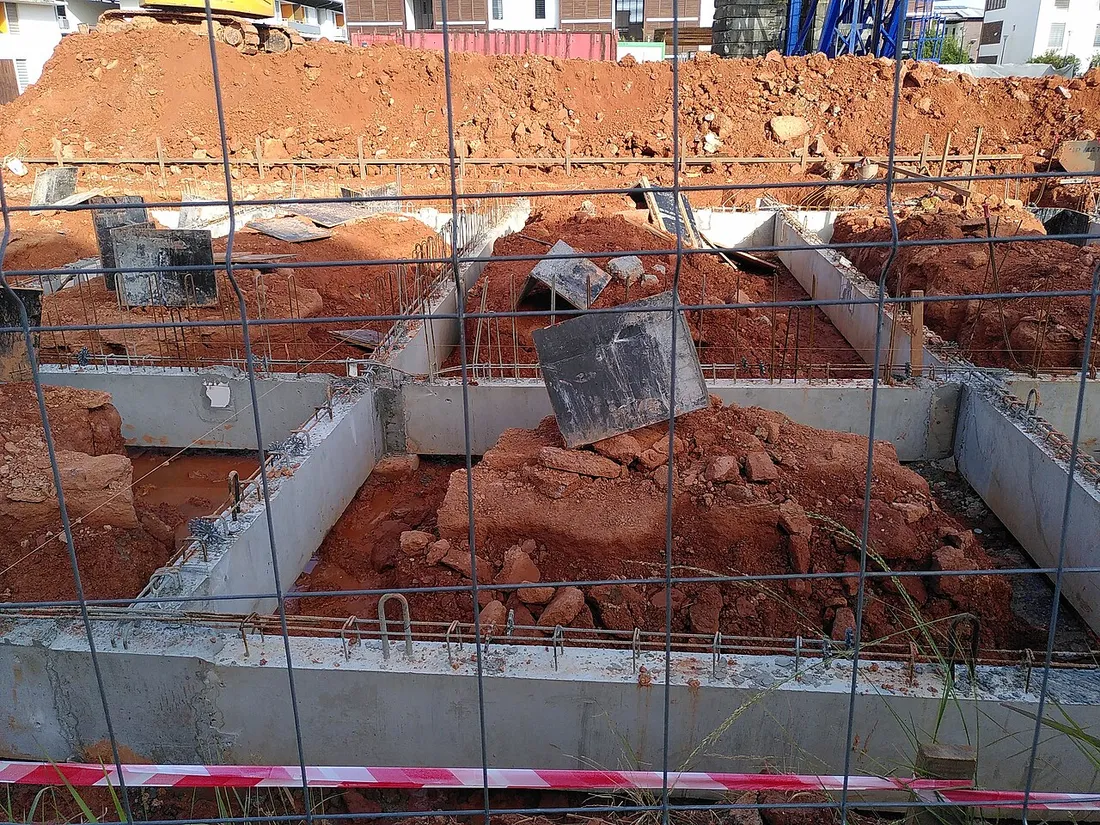
Construction zones in French Guiana and where to stay nearby
The right accommodation depends first and foremost on where the contract is located. Here are the main activity hubs.
Cayenne, Rémire-Montjoly, Matoury and the greater urban area
This is the territory’s economic heart. Most building, utility and public facility projects are concentrated here. Staying within the urban area (central Cayenne, the Montabo, Zéphir or Baduel districts, or on the Rémire-Montjoly and Matoury side near Félix-Éboué airport) keeps you close to urban sites while retaining access to shops, materials suppliers and services.
Kourou and the space sector
Kourou lives to the rhythm of the Guiana Space Centre. Projects there are technical and often subject to access and security constraints. Demand for accommodation is structurally strong and cyclical: it is best to arrange long-term bookings well in advance, because activity peaks drain the supply.
Saint-Laurent-du-Maroni and western French Guiana
The west is experiencing strong demographic growth and is the focus of public investment (facilities, housing, utilities). Saint-Laurent-du-Maroni is the pivotal town. Accommodation is scarcer there than in Cayenne: a reliable furnished solution, booked in advance, spares you the daily 250 km round trips from the east.
Kourou–Sinnamary, inland communes and remote sites
Some contracts (utilities, roads, engineering structures) take place outside the urban hubs. There, proximity trumps everything else: cutting the daily commute means cutting fatigue, road risk and fuel costs.
The para-hotel advantage for a construction company
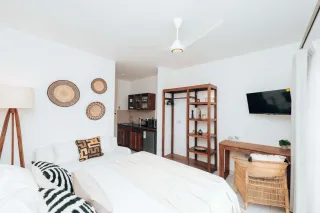
This is the heart of the matter. Para-hotel accommodation is not a simple private rental: it is a registered business activity providing hotel-type services (linen, housekeeping, reception) and which, on that basis, invoices as one company to another.
In practical terms, for your project:
- An invoice in the company’s name. The accommodation is billed directly to your company, with all the expected legal particulars. No more handwritten “receipts” or screenshots that are unmanageable at year-end.
- Payment by bank transfer. You pay by bank transfer from the company account, which simplifies accounting reconciliation and avoids employees fronting expenses.
- VAT on accommodation. Para-hotel accommodation falls under a VAT regime. In French Guiana, the tax situation is specific (VAT is not applied there in the same way as in mainland France). The right reflex: request a detailed invoice and have your accountant confirm what is recoverable and deductible under your regime. Never assume a “standard” rate applies without local verification.
- Compliant expense claims. Your site managers have clean, dated supporting documents issued in the company’s name, easy to fold into contract tracking and to produce in the event of an audit.
- Long-term continuity. A stay of several weeks or months is contracted in advance, with a possible tapered rate, without having to rebook week after week.
Conversely, a conventional private holiday rental guarantees neither company invoicing, nor bank transfer, nor deductibility, nor stability over time. For a works director or a finance and administration manager, that is the difference between a controlled cost line and a source of disputes.
What to check before booking site accommodation
Before committing your company for several weeks, run through this checklist. It will spare you unpleasant surprises.
- Is the invoice issued in the company’s name, with the legal particulars (company name, registration number, address)?
- Is payment by bank transfer accepted, with written payment terms?
- Does VAT appear on the invoice, and has your accountant confirmed what is recoverable/deductible?
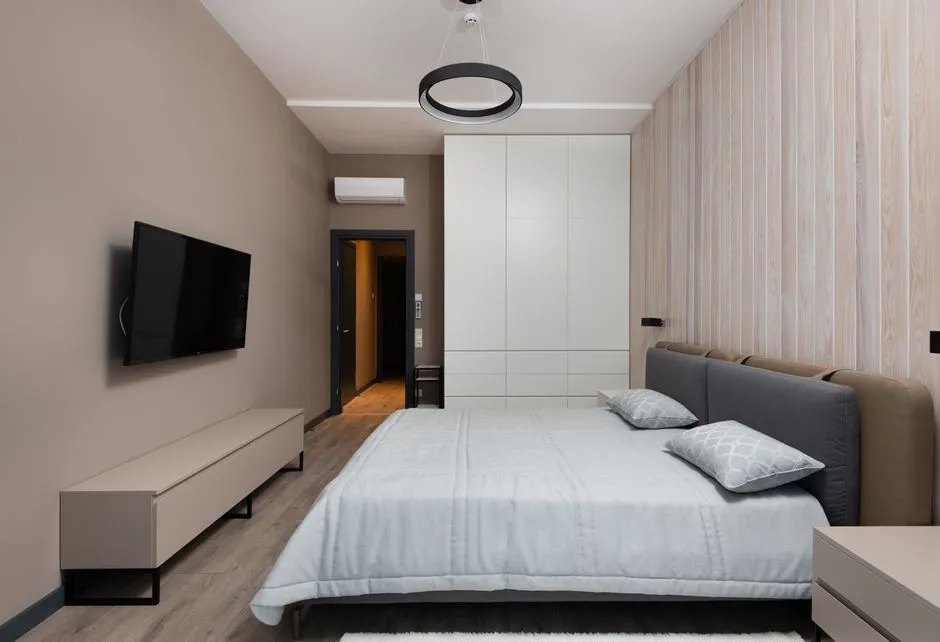
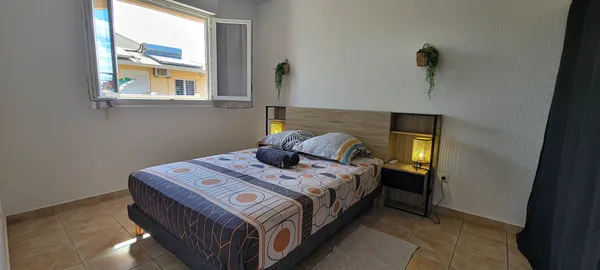
- Is the accommodation air-conditioned, with sleeping arrangements suited to the number of workers?
- Is the internet connection reliable (plans, exchanges with head office, report filing)?
- Is there an equipped kitchen for preparing meals and keeping the catering budget under control?
- Are linen and housekeeping provided, and how often?
- Is secure parking available for vehicles and valuable equipment?
- Is the distance to the site reasonable (a measured daily commute, not 2 hours round trip)?
- Are the cancellation and extension terms clear (construction schedules often slip)?
- Is there a single point of contact reachable if something goes wrong (a leak, a broken air conditioner, a delayed arrival)?