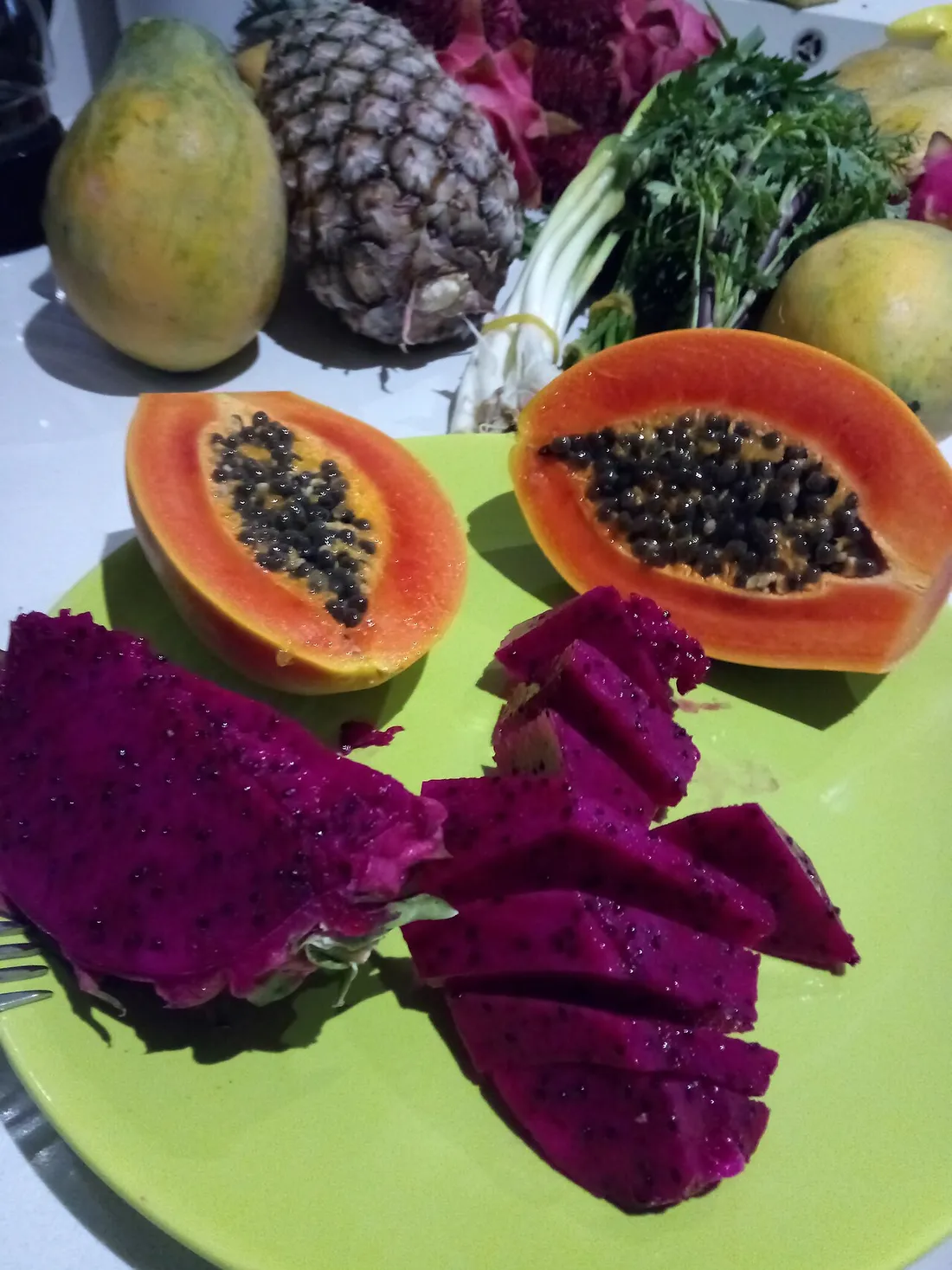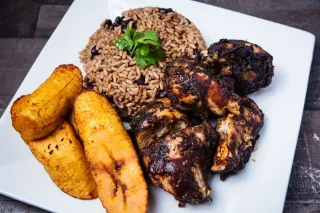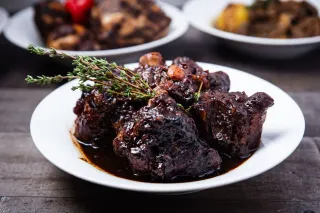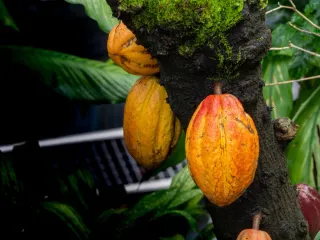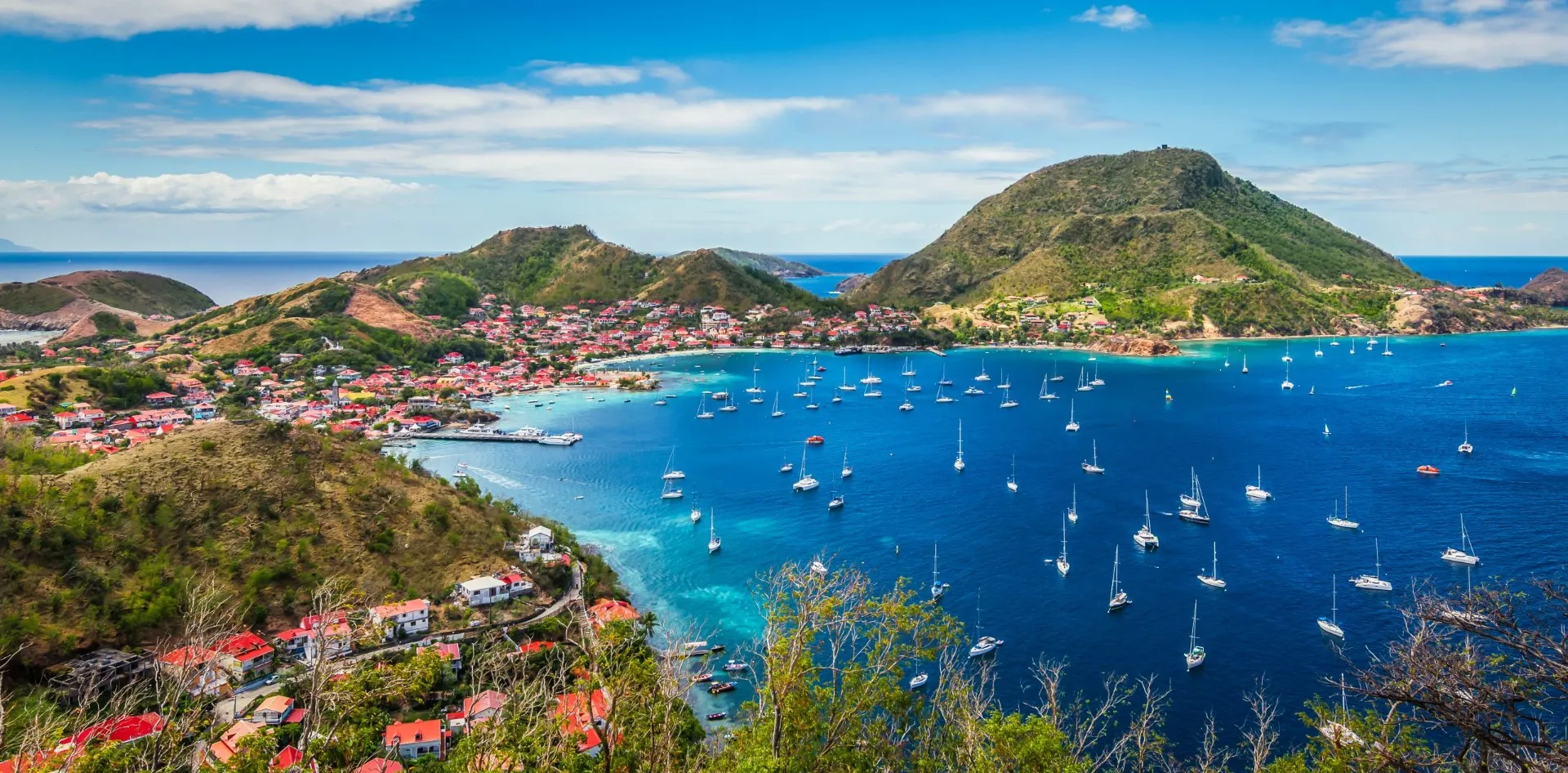
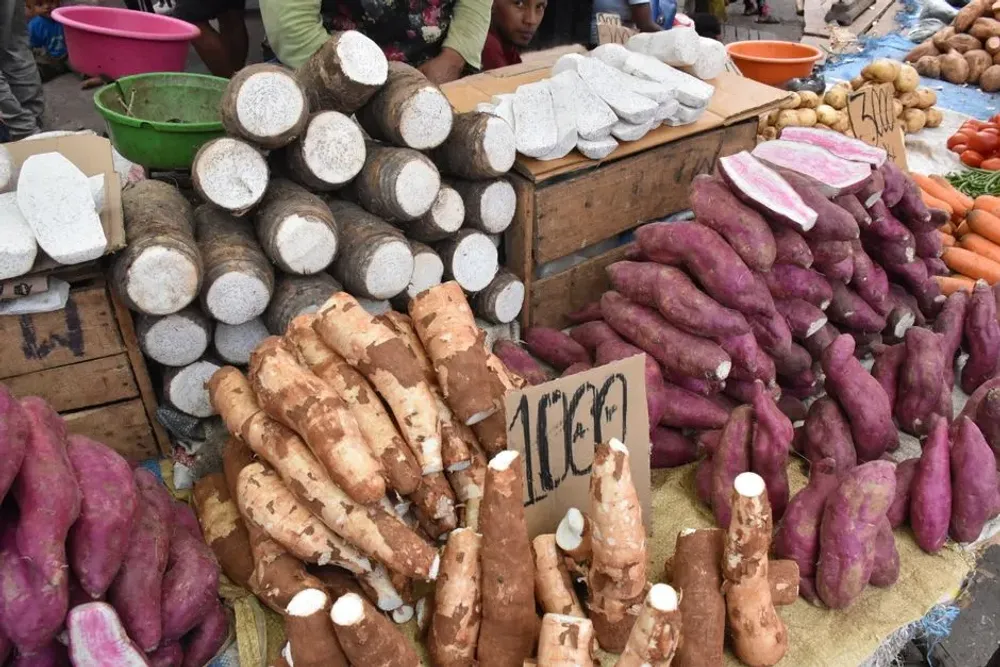
There are two ways to experience Guadeloupe. The first stays on limestone Grande-Terre, between the turquoise beaches of Sainte-Anne and the marina of Saint-François. The second crosses over to volcanic Basse-Terre, where La Soufrière rises to 1,467 metres and the black earth grows everything the market sells in the morning. The Basse-Terre market, set at the foot of the island’s administrative capital, is by far the best place to understand the Guadeloupean plate before you even taste a dish. At Hostel Toucan, it’s the first outing we recommend to travellers curious about Creole cooking: a stall of native fruits says far more than any restaurant menu. Here’s how to wander it without looking like a lost tourist, recognise what you’re buying and cook it that very evening in your rental.
Why the Basse-Terre market is worth the trip
On the leeward wing of the butterfly-shaped archipelago, Basse-Terre is nothing like its neighbour’s seaside showcase. It’s a land of tropical forest, rivers and Creole gardens, and its market reflects that. Here you won’t only find punnets for tourists: the vendors also sell to local families, to restaurant owners from nearby towns and to Sunday home cooks. This dual clientele is your guarantee of freshness and fair prices.
The market comes alive early. For Guadeloupe’s native fruits as for the root vegetables, the sweet spot is between 6:30 and 9:30 a.m., before the heat builds and the finest produce is gone. Saturday is the liveliest day, but the stalls run from Tuesday to Sunday morning. Allow an hour to take it all in without rushing, exchange a few words in Creole and taste what the vendors hand you — because here, you taste before you buy.
Getting there and planning well
From Pôle Caraïbes airport (Pointe-à-Pitre), it takes about 1 hour 15 minutes to reach Basse-Terre along the windward coast, a little less by taking the Route de la Traversée through the national park. A few local reflexes:
- Bring cash: most vendors don’t take cards. Carry small notes — 5, 10 and 20 euros.
- Get a sturdy bag: yams and breadfruit quickly add up in weight, and thin plastic gives way.
- Park early: parking around the market fills up from 8 a.m. on Saturdays.
- Don’t be afraid to chat: asking “ki sa sa yé?” (“what is this?”) always opens up a conversation and, often, a taste.
Recognising Guadeloupe’s native fruits
The term “fruits-pays” refers to everything that grows locally, as opposed to imported fruit. It’s the pride of the market, and the source of plenty of confusion for visitors. Here are the essentials to identify.
Fruits to taste without hesitation
- Maracudja (passion fruit): small, wrinkled when ripe, tart. Pressed into juice or eaten with a spoon. Expect €3 to €5 per kilo.
- Carambola (star fruit): star-shaped once sliced, slightly tart, perfect in juice or as a garnish.
- Sugar apple and soursop: white, creamy, sweet flesh. The soursop, larger, turns into a silky juice, often around €2 to €4 each depending on size.
- Guava: queen of jams and juices, intensely fragrant.
- Spanish lime (quenette): a small green fruit sold in bunches in summer, with tart flesh around a large stone. You suck it like a natural sweet.
Fruits that are often confused
- Maracudja vs. giant granadilla (barbadine): the barbadine is a giant passionflower, far larger, with milder flesh.
- Ambarella (June plum, prune de Cythère): green and crunchy when young, yellow and tender when ripe. Surprising in juice.
- The banana: plantain, apple banana (figue-pomme), ti-nain: three radically different bananas. The apple banana is eaten raw as a dessert; the plantain and the ti-nain (green banana) are cooked as a vegetable, never raw.
It’s precisely this last distinction that separates the savvy traveller from the novice: in Guadeloupe, many “fruits” are cooked in savoury dishes, and several “vegetables” are actually botanical fruits. The market is the ideal school for sorting it all out.
Decoding root vegetables and native starches
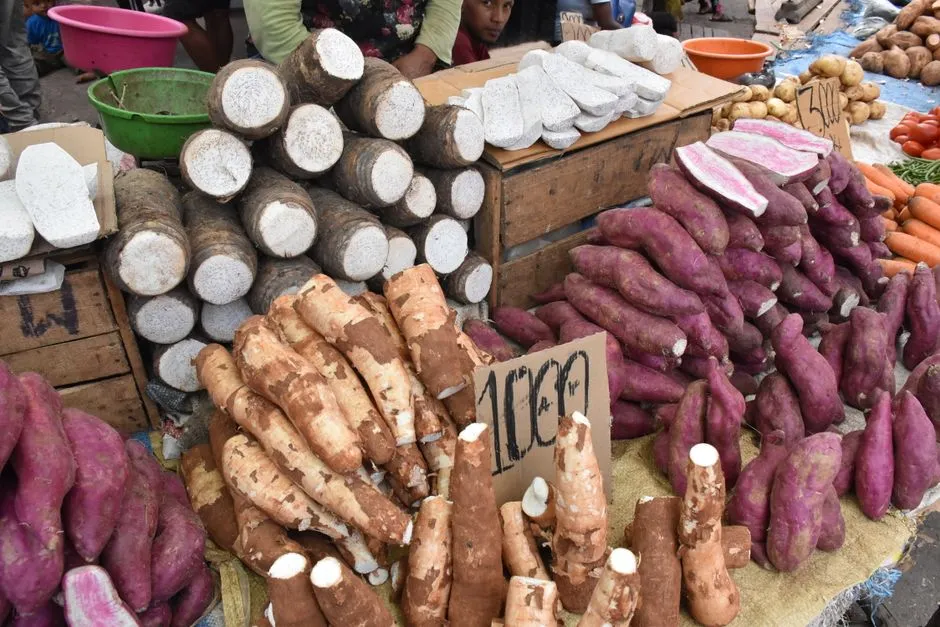
This is the heart of Creole cooking, what makes up the Sunday “bòkit” and accompanies colombo or grilled fish. The root vegetables all look alike at first glance: brown, earthy, knobbly. Learn to tell them apart.
The essential roots
- Yam (igname): a large root with rough skin, white or yellow flesh, drier than a potato. Boiled or roasted. A keyword of local plates, the yam is also the backbone of “migan.” Average price: €2.50 to €4 per kilo.
- Dasheen (madère or taro): a tuber with grey or purplish flesh, slightly sticky when cooked, with a hazelnut taste. The base of the famous migan and excellent in a gratin.
- Sweet potato: orange or white, sweet, quicker to cook.
- Cassava (manioc): turned into cassava flour and into the traditional flatbread.
The fruit-vegetables to know
- Chayote (christophine): a small pale-green pear-shaped vegetable, with tender, mild flesh. At the heart of the yam-and-chayote pairing found in so many Creole gratins, it’s cooked in a gratin, in a daube, or grated raw in a salad. Very affordable: €1.50 to €3 per kilo.
- Breadfruit: a large green fruit with studded skin, cooked exclusively as a vegetable once done (boiled, fried into crisps, roasted over coals). Its starchy flesh stands in for bread — hence the name. Expect €2 to €4 each.
- Giraumon (Caribbean pumpkin): an orange squash with sweet flesh, indispensable to velouté soup and migan.
- Plantain banana: already mentioned, but it earns its place here, so central is it as a side.
How to choose them at the market
A few common-sense pointers, passed on by the vendors:
- Yam and dasheen should be firm, with no soft spots or smell of fermentation.
- Chayote is best chosen nicely green and smooth, without wrinkles or brown spots.
- Breadfruit keeps a few days if still good and green; ripe (turning yellow), it cooks quickly or can be left to sweeten.
- Plantain is cooked green (firm, as a vegetable) or very ripe and speckled with black (fried, sweeter).