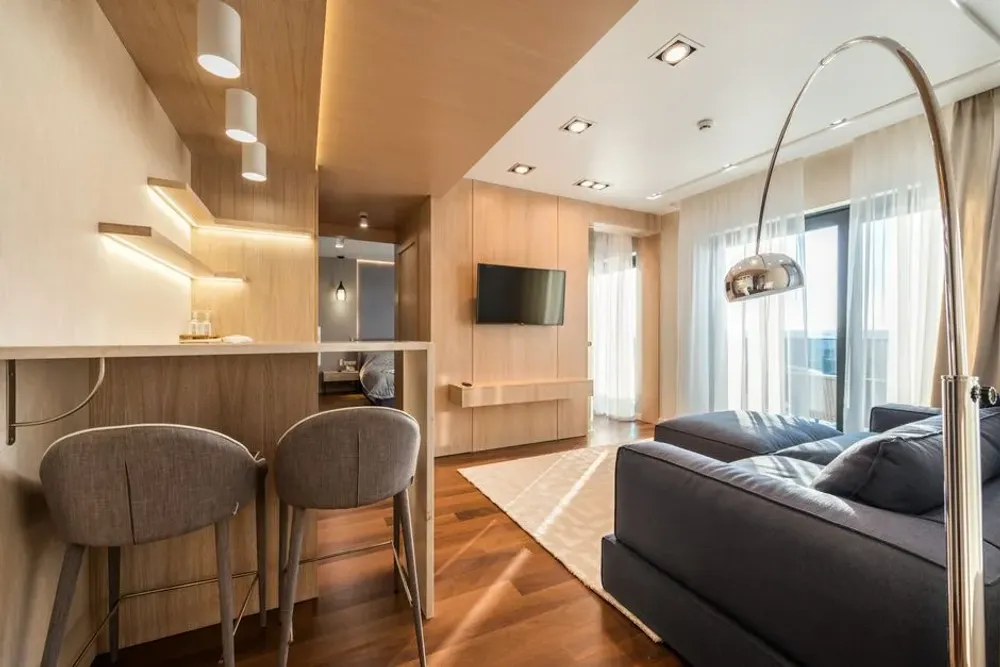
A manager sent to Fort-de-France for three weeks, a technical team working on a site in Le Lamentin, a consultant making back-and-forth trips to Le Marin: as soon as a business trip runs beyond a few nights, accommodation becomes a genuine budget line, not just a logistical detail. Should you book a classic hotel, with its easy booking process and daily services, or opt for an aparthotel (or a furnished rental managed under the para-hotel model) offering a kitchen, a workspace and rates that drop the longer you stay?
There is no universal answer. It depends on the length of the stay, the number of people, the need for accounting documentation and the way your company recovers (or doesn’t recover) VAT. This article lays out the calculation in concrete terms for Martinique, with ballpark figures given for guidance only, and above all the administrative criteria that often tip the decision just as much as the advertised price.
Working out the true cost of a business stay
The price of a hotel night is never the real cost of a trip. To compare a hotel and an aparthotel in Martinique honestly, you have to add up everything that orbits around the room.
On a business stay, the items to factor in are generally:
- The nightly rate itself, which varies widely by season (peak tourist season from December to April, carnival period, summer holidays).
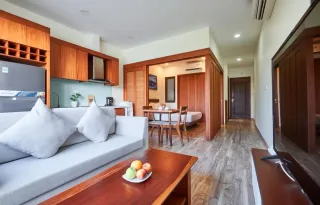
- Meals: at a hotel, breakfast is sometimes included but lunch and dinner always mean restaurants; in an aparthotel, the equipped kitchen lets you cook and sharply reduce this item.
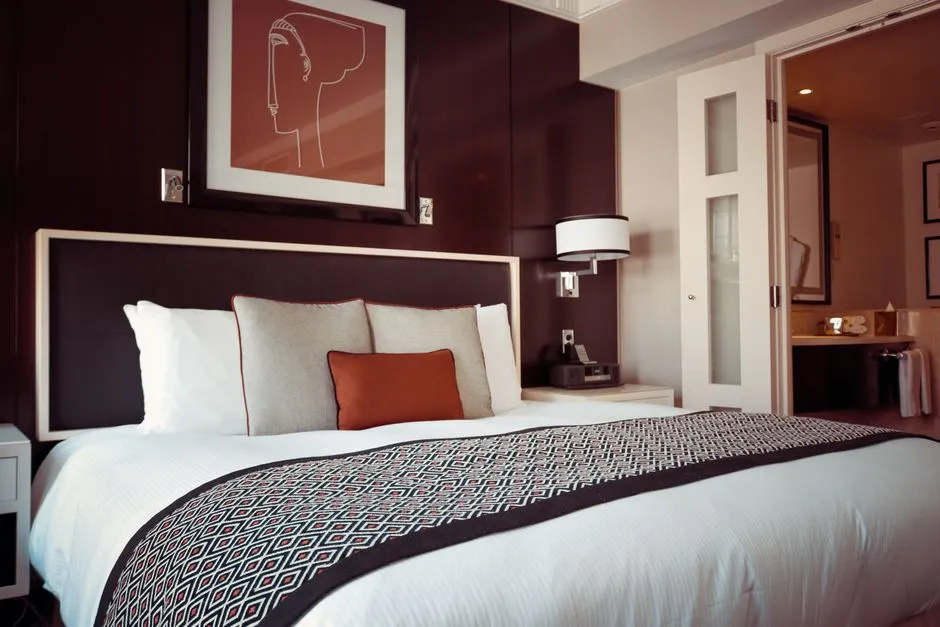
- Linen and cleaning: daily at a hotel, often weekly (or on request) in a furnished rental, which changes the rate.
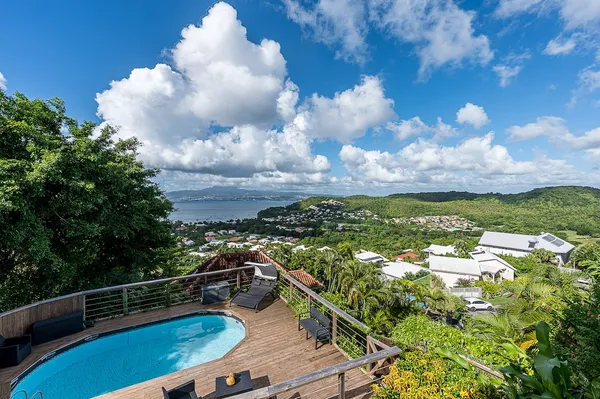
- Parking: free at most residences and villas, sometimes paid or limited at hotels in central Fort-de-France.
- Time: accommodation close to the site or the client means fewer trips on the N1 or the ring road at rush hour.
A guide to price ranges (indicative)
Purely as a guide and outside high-demand periods, a mid-range hotel room in Martinique often falls somewhere between a few dozen and a little over one hundred euros a night, while an aparthotel or a para-hotel furnished rental tends to show a higher nightly rate for a single night, but a clearly decreasing one as soon as you book by the week or the month. These orders of magnitude vary considerably by town, season and standard: they are there to help you reason, not to budget down to the cent.
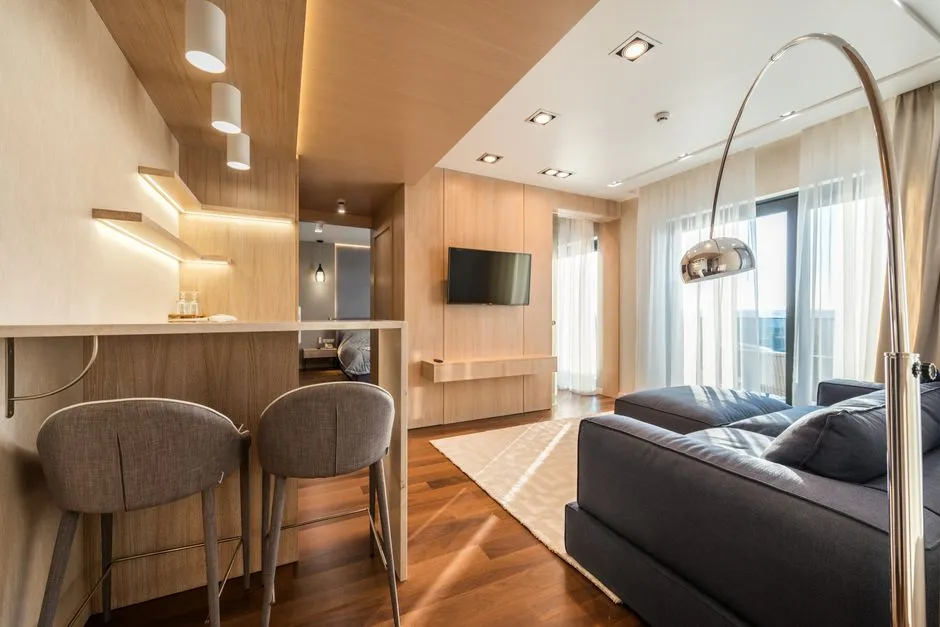
The real tipping point is duration: over one or two nights, the hotel usually keeps the advantage of simplicity and price. Beyond a week, and especially over several weeks, the aparthotel takes the lead thanks to sliding rates and meals cooked on site.
The tipping point based on length of stay
There is no magic threshold that applies everywhere, but a simple line of reasoning helps you decide.
- 1 to 3 nights: the hotel is generally the most relevant choice. No logistics, 24/7 reception, instant booking, no linen or grocery shopping to manage.
- 4 to 10 nights: the grey zone. If the employee always eats out and only needs a bed, the hotel holds up. If they want to cook, work in peace or host a colleague, the aparthotel becomes competitive.
- Beyond 10 nights, and all the more so over a month or more: the aparthotel or furnished business rental almost always takes the economic advantage. Monthly rates drop substantially, and the food budget shrinks as soon as there is a kitchen.
For a long assignment (a construction project, an audit mission, a probation period, a relocation of several months), the equipped furnished rental becomes the standard format: at that point we’re talking about “assignment housing” rather than tourist accommodation.
Martinique’s geography changes the calculation
The right trade-off also depends on where the assignment takes place, because Martinique is not a homogeneous block.
Fort-de-France and the central urban area
Fort-de-France concentrates government offices, company headquarters and services. Hotels are more numerous there but city-centre parking is restrictive. For an assignment in the heart of the capital, accommodation up in the heights (Didier, Redoute) or in neighbouring towns can offer more space and a parking spot, at the cost of a few minutes of travel.
Le Lamentin and the business zone
Le Lamentin is home to Aimé Césaire airport, the Jambette business zone and much of the industrial and logistics fabric. For a technical assignment or a construction site in this area, staying nearby avoids the daily traffic jams on the ring road. An aparthotel or a nearby furnished rental saves precious time.
The south: Le Marin, Sainte-Anne, Le Diamant, Les Trois-Îlets
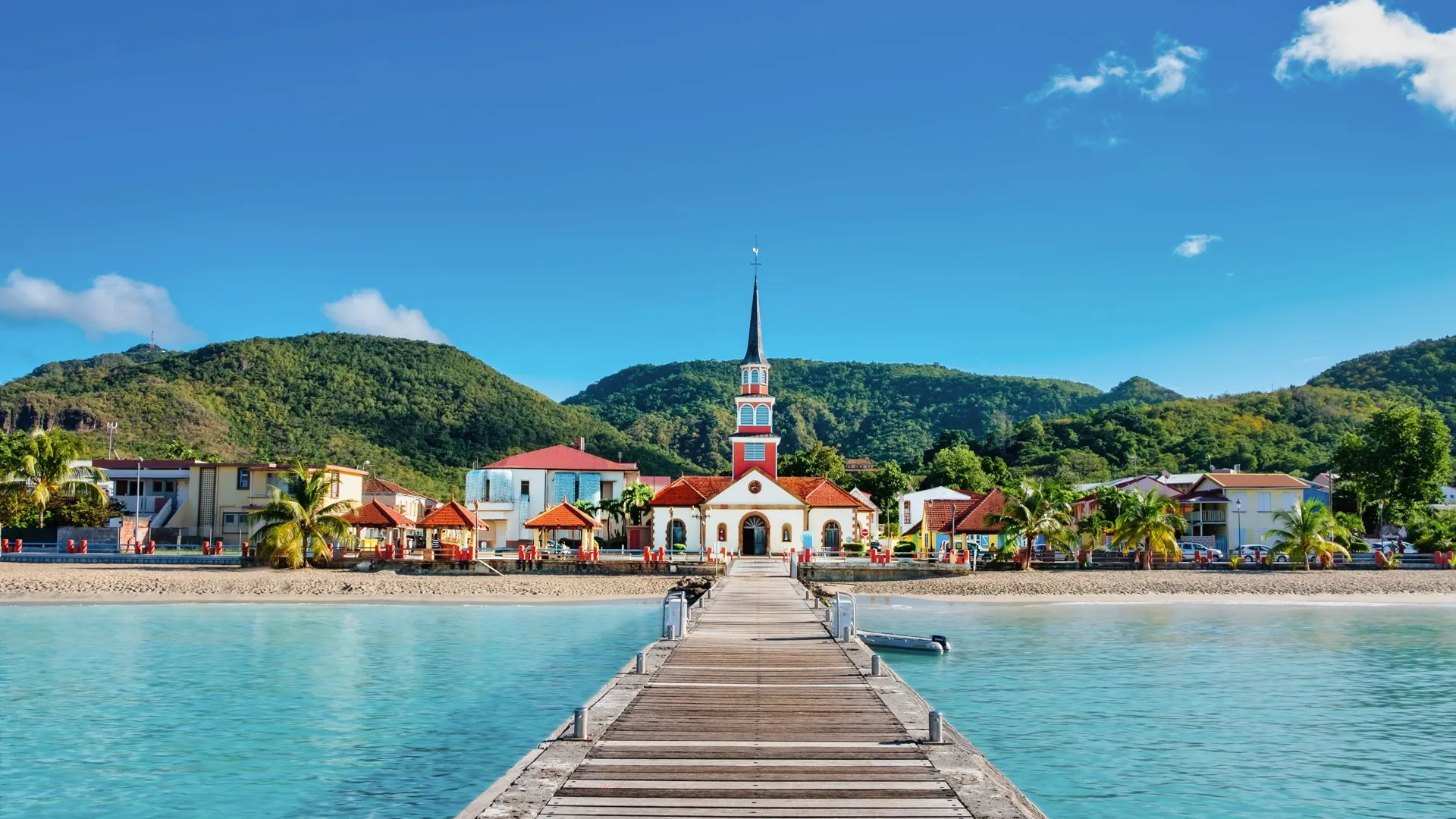
The tourist south (Le Marin marina, Trois-Îlets, Sainte-Luce, Le Diamant) offers a high density of quality furnished rentals, designed for stays of a week or more. For an assignment linked to sailing, tourism or a client in the south, the para-hotel furnished rental is often the most available and most suitable format.
The north: Saint-Pierre, La Trinité, the Atlantic North
The north is less well served by business hotels. For work in Saint-Pierre, Morne-Rouge or on the Atlantic coast (La Trinité, Le Robert, Le François), the equipped furnished rental often fills a gap where hotel supply is scarcer.
The differentiator that counts: administrative compliance
This is where the choice is decided, just as much as on price. For a company, accommodation is not merely a place to sleep: it is an expense to justify, to book in the accounts and sometimes to reclaim. A well-structured para-hotel stay can tick all those boxes.
The invoice in the company’s name
A solid expense report starts with a clean invoice. With a para-hotel provider organised to host professionals, the invoice is issued in the company’s name (registered name, company registration number, address), not in the employee’s personal name. That is what distinguishes a defensible business expense from a simple private receipt, particularly in the event of an audit.
A compliant expense report
For the expense to be accepted in the accounts, the invoice must show the expected elements: full identity of the provider, stay dates, nature of the service, amount excluding tax, VAT rate and amount, total including tax. Para-hotel accommodation designed for companies provides this level of detail by default, whereas a private peer-to-peer rental sometimes issues only a bare-bones receipt, insufficient for a rigorous expense report.
Payment by bank transfer
Many companies prefer, for cash-flow and accounting reasons, to settle by bank transfer rather than having the employee front the cost on a personal card. A provider used to business clients accepts transfers, possibly with a deposit and a balance, which simplifies accounting reconciliation and spares employees from advancing expenses.
The VAT question
This is a technical but decisive point. Para-hotel activity (furnished accommodation combined with hotel-type services: reception, cleaning, linen supply, etc.) falls under a regime that is subject to VAT, unlike a simple bare furnished rental from a private individual. In practice, this means a para-hotel stay invoice shows VAT, potentially recoverable by the company depending on its situation and the rules applicable to accommodation.
One caveat, though: the rules on deducting VAT on accommodation costs for directors and employees are tightly framed and come with restrictions. Recovery depends on your precise tax situation. This point deserves a check with your accountant before you build it into your calculation. What para-hotel activity guarantees is a properly issued invoice showing VAT; what your accounting department does with it depends on your own tax regime.