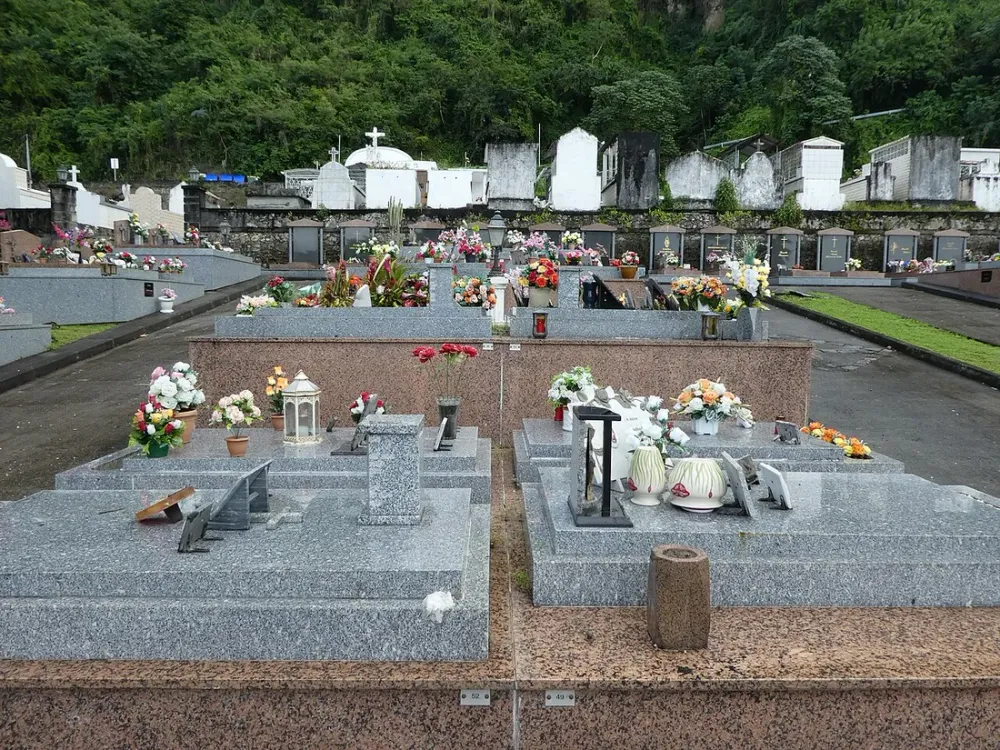
There is one night in Martinique when the cemeteries, usually so silent, become the most alive places on the island. As dusk falls on November 1st, thousands of tiny flames flicker to life across the graves, turning every path into a river of light. All Saints’ Day in Martinique is nothing like a day of austere sorrow: it is a warm, family-centred vigil of profound beauty, surely one of the most moving and least-known traditions for travellers.
After several years spent living the island through its seasons and advising our guests, here is our hands-on guide to understanding, experiencing and respecting this powerful moment: the lighting of the cemeteries in Martinique.
All Saints’ Day in Martinique: far more than a public holiday
To set the scene: Martinique is a French overseas department and region (DROM), with Fort-de-France as its capital, around 360,000 inhabitants, and a 5-hour time difference behind Paris in winter. French and Creole are both spoken, and November 1st is a public holiday, just as it is in mainland France.
But here, All Saints’ Day takes on an entirely different dimension. Where the day of the dead often stays low-key elsewhere, in Martinique it becomes a great collective gathering. November 1st in the Caribbean is prepared days in advance: graves are cleaned, repainted and decorated with flowers, then, come evening, they are illuminated. Whole families, children included, honour the departed in an atmosphere that blends contemplation, reunion and gentleness.
This Creole All Saints’ tradition also marks a turning point in the calendar: the island is just leaving the hivernage (the wet season) to enter, in December, the Carême, the dry season that is the best time to visit. November is thus an underrated shoulder season: softer prices, moderate crowds and this unique cultural interlude.
Why are the graves lit up?
The gesture is symbolic: the burning candle is the flame of remembrance offered to those who have passed. Lighting a votive on a loved one’s grave is a way of saying they are not forgotten. Grave after grave, an entire cemetery catches alight in a golden glow, and a whole community gathers around this shared memory.
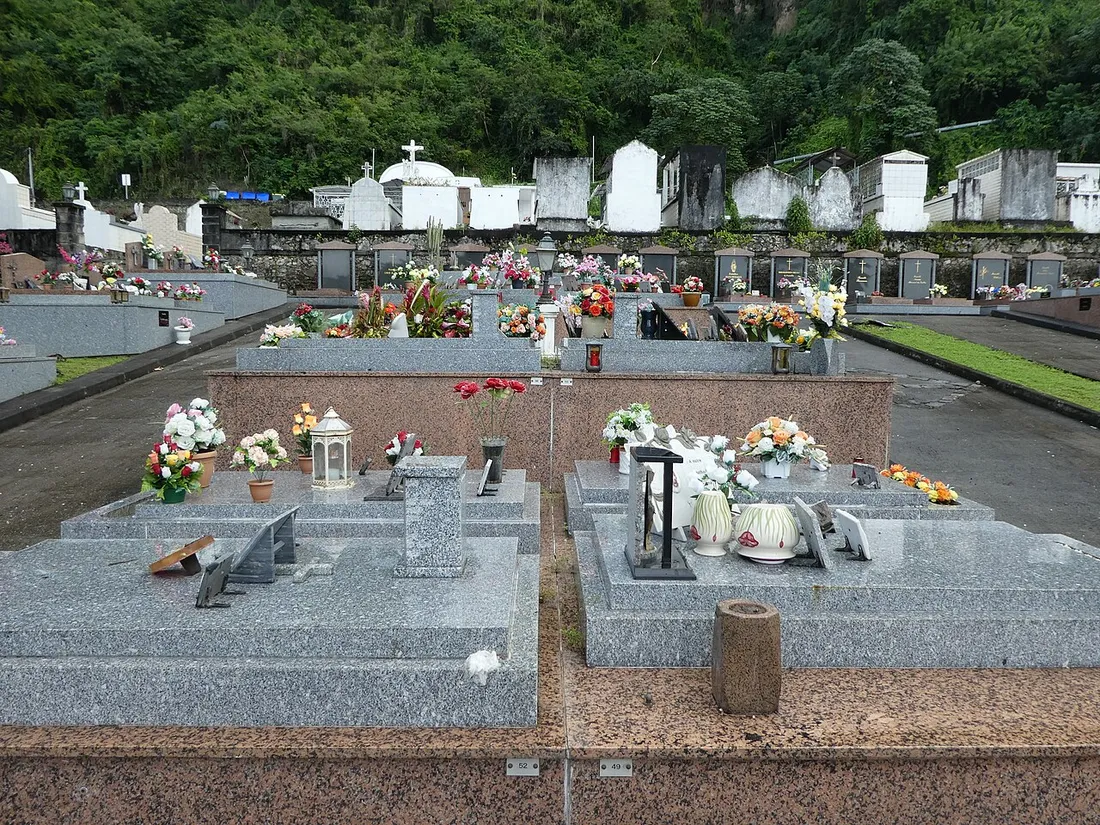
The lighting of cemeteries in Martinique: the heart of the tradition
If you were to keep just one image of All Saints’ Day in Martinique, it would be this one: a cemetery entirely studded with candles at nightfall. The lighting of the cemeteries in Martinique is a striking spectacle, where fervour rivals pure beauty.
How the evening unfolds
- In the late afternoon of November 1st, families converge on the cemeteries, arms full of candles, votives and flowers.
- As the sun sets (around 5:30-6 p.m., night falls quickly and early at these latitudes), the flames are lit one by one, and the chequerboard graves of the Creole cemeteries come alive with hundreds of lights.
- People stay, talk in hushed voices, run into faces they haven’t seen for a year: this too is All Saints’ Day, a moment of social connection.
- The vigil often continues until 9 or 10 p.m. in a peaceful atmosphere.
The most spectacular cemeteries
The whole island honours its dead, but certain towns in the South stand out for the beauty of their illuminations:
- Rivière-Pilote: its cemetery is one of the island’s most iconic for All Saints’ Day, thanks to the scale of the illumination and the density of candles. A must-see.
- Le Marin: another high point of glowing remembrance in the South, with a cemetery that draws large crowds that evening.
- Sainte-Anne, Le Diamant and Les Trois-Îlets: more intimate cemeteries but just as moving, easy to reach if you’re staying on the seaside.
- Fort-de-France: the Levée cemetery, in the capital, offers a dense and impressive illumination.
Our local tip: head for Rivière-Pilote for the most memorable experience, but arrive early, as parking quickly becomes difficult in the surrounding streets.
Experiencing Martinique’s All Saints’ Day as a visitor: the right etiquette
Attending the lighting of the cemeteries is entirely possible for a traveller, provided you remember that it is above all an intimate moment of contemplation for families. Here is how to enjoy it respectfully.
- Stay discreet. You watch, you take it in, you walk softly: this is neither a festival nor an attraction, restraint is the order of the day.
- Photograph tactfully. Wide shots of the illuminated cemetery are magnificent, but avoid framing people deep in contemplation, and turn off the flash.
- Dress appropriately. A simple, covering outfit remains more fitting than beachwear, even at 28°C.
- Don’t light candles at random. The gesture belongs to families on the graves of their loved ones. Simply admire.
- Greet people, smile. Martinicans are welcoming: a respectful “good evening” is always well received.
What to do with your day on November 1st
As All Saints’ Day is a holiday, many shops and sites close in the afternoon. Make the most of it with a quiet day: a beach morning on the Caribbean side (Les Salines in Sainte-Anne, Anse Dufour, Grande Anse) before the crowds, lunch at an open lolo (a Creole beach-shack restaurant), then a restful late afternoon so you’re free come evening, at the cemetery of your choice.
To plan the rest of your island discovery — southern beaches, Mount Pelée and the ruins of Saint-Pierre, the Rum Route, the Balata Garden — find all our must-sees in our complete guide to Martinique.