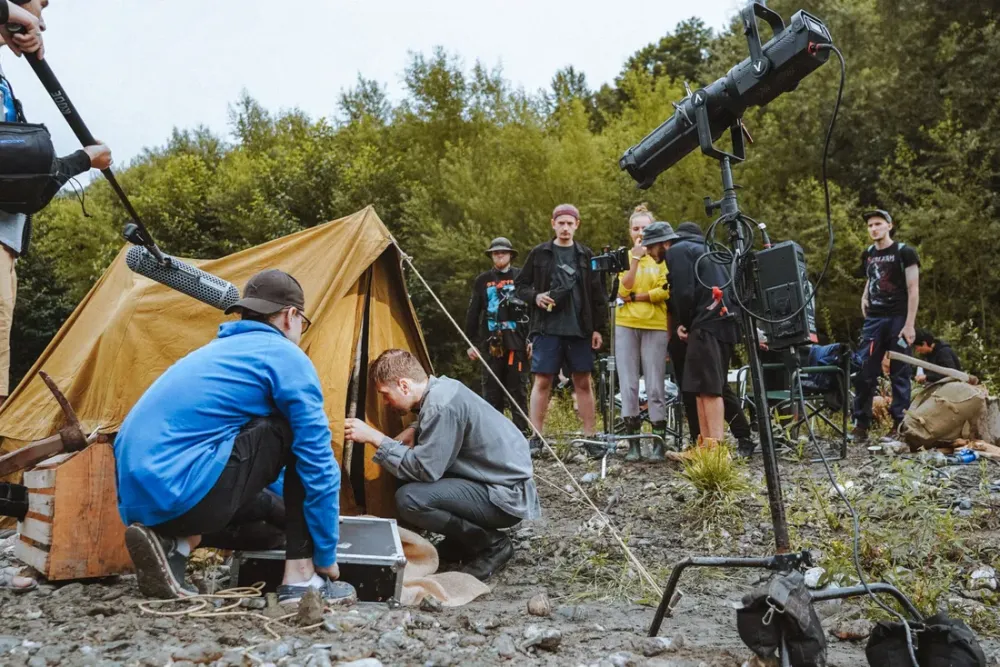
You are preparing a shoot in French Guiana: a wildlife documentary on the Maroni, a series about the penal colony of the Îles du Salut, a corporate film for the Guiana Space Centre, a report on gold mining or the filming of an event in Cayenne. Beyond the shooting schedule and the permits, one question always comes up in production: where do you house the crew, for how long, and above all how do you obtain a clean invoice in the production company’s name? This is precisely where serviced accommodation makes all the difference compared with a standard holiday rental or a private host. This article reviews the realities on the ground in French Guiana, the budgetary and administrative constraints of a production, and what you should demand from a professional accommodation provider so that your company’s accounting does not turn into a headache once you are back.
Why French Guiana is a filming location unlike any other
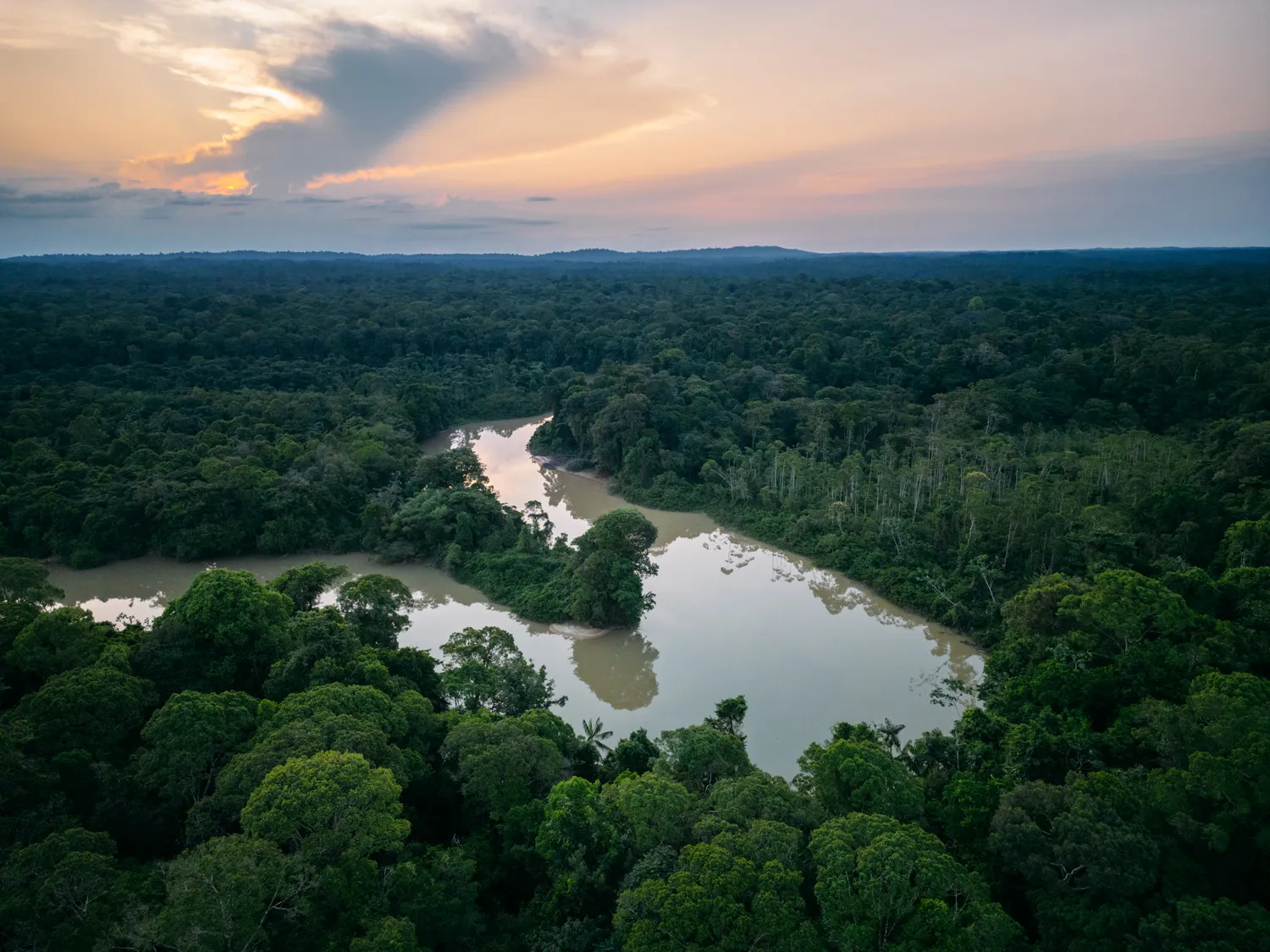
French Guiana is not just another shooting destination, and that directly shapes your accommodation needs. The territory is vast (the largest French department), overwhelmingly covered by Amazon rainforest, with access routes that are sometimes long and transport logistics that stretch out the working day.
In practical terms, a crew filming along the coast (Cayenne, Rémire-Montjoly, Matoury, Kourou) does not face the same constraints as a crew heading up the Maroni towards Maripasoula or setting off for the Approuague. On the coast, accommodation is concentrated; inland, it becomes scarce and improvised.
A few useful geographical markers to help you settle on your logistics base:
- Cayenne: administrative centre, prefecture, airport nearby (Félix Éboué, in the municipality of Matoury). An ideal base for urban and institutional shoots, or for productions covering the coastal area.
- Rémire-Montjoly: a residential seaside town adjoining Cayenne, with beaches, trails and quiet neighbourhoods. Often favoured for housing a crew in green surroundings while staying close to the city.
- Kourou: home of the Guiana Space Centre. Essential for any space-related project, with its own access and scheduling constraints tied to launch campaigns.
- Saint-Laurent-du-Maroni: gateway to the west, penal colony heritage (the Camp de la Transportation), and a departure point for the river and neighbouring Suriname.
- The Îles du Salut (off the coast of Kourou): an iconic setting (Île Royale, Île Saint-Joseph, Île du Diable) for any historical subject on the penal colony.
This dispersion explains why a production often needs a fixed base on the coast for several weeks, rather than a string of hotels. That is the heart of what we offer: discover our accommodation designed for long professional stays.
What a production really needs: a base, not a bedroom
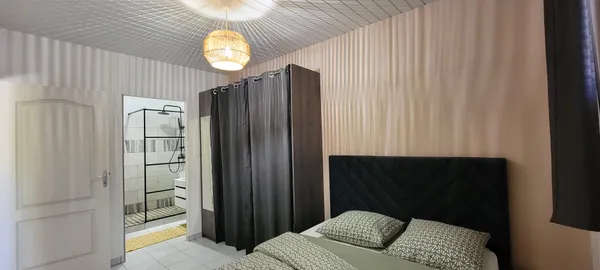
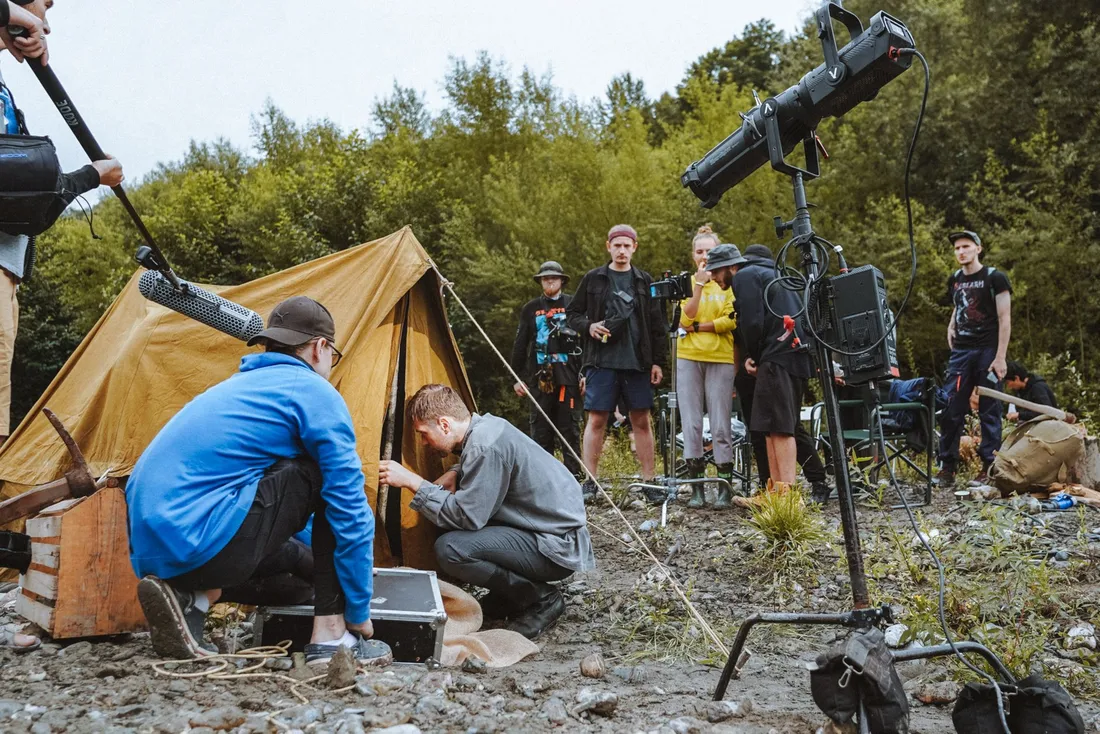
A film crew is not just looking for a place to sleep. It needs a living space that can absorb the rhythm of a production: late arrivals, departures before dawn, equipment to store and secure, meals at odd hours, evenings spent reviewing rushes.
What a crew expects in practical terms
- Shared space to gather, hold a technical debrief and prepare the next day.
- A fully equipped kitchen: on a shoot, eating out at lunch and dinner for three weeks is expensive and exhausting. Being able to cook or store meals changes everything.
- Secure storage for equipment (cameras, lenses, drones, sound gear): often the most sensitive point, and the most costly if something goes wrong.
- A good internet connection for backups, rush transfers and keeping in touch with the production office back home.
- Flexibility on arrival and departure times, incompatible with the rigid slots imposed by some hotels.
- Long-stay capability: most shoots in French Guiana run over several weeks, which calls for pricing and terms suited to an extended stay.
Small crews, large crews
For a small crew (2 to 5 people: director, camera operator, sound recordist, local fixer, production), one well-sized entire property is often enough. For a larger crew, it makes sense to book several properties managed by the same contact, with centralised invoicing. That is exactly what a property management company handling a portfolio of homes can offer: a single contact, a single quote, a single invoice. See our property management service to understand this multi-property approach.
The serviced-accommodation advantage: an invoice in the company’s name
This is the point that radically separates a professional provider from a peer-to-peer rental. For a production company, accommodation is not a personal expense: it is an operating cost that must be justified in the accounts.
Company invoice and compliant expense report
A rental booked on a consumer platform in an employee’s name and paid with a personal card generates, at best, a receipt in an individual’s name. Back at the office, your accountant will have to attach that expense to the company, which is a source of friction and rejections.
A professional serviced-accommodation provider issues an invoice in the production company’s name, with all the expected details: company name, SIREN/SIRET number, address, stay dates, description of the service, amounts. This invoice can be used directly in expense reports and accounting, without any contortions.
Payment by bank transfer
On a production budget, payment by a crew member’s personal credit card is far from ideal: card limits, cash advances to be reimbursed, receipts scattered everywhere. A bank transfer issued directly by the company is much cleaner: the expense leaves the company account, it is traceable, and it matches the invoice line for line. It is a standard method of settlement between professionals, and the one we favour for corporate stays.
The question of VAT
VAT is a subject to be handled seriously and without approximation. Two points deserve your attention:
- A specific tax regime applies in French Guiana. French Guiana is one of the territories where VAT is not, as things currently stand, applied in the same way as in mainland France. This has direct consequences for your invoices and for what your company can or cannot reclaim. We recommend checking this with your accountant based on your own situation.
- Serviced accommodation and unfurnished rentals do not have the same VAT status. Serviced accommodation (with associated services such as reception, cleaning and linen provision) falls under a different regime from a simple furnished rental. This distinction may influence how your expense is treated in the accounts.
Important note: we present these elements for information purposes only. Tax regulations evolve and depend on your structure. Always have the VAT and accounting treatment validated by your accountant or your production department. We provide a compliant invoice and supporting documents; the final tax analysis is a matter for your accounting team.
What to budget for accommodation (indicative benchmarks)
It is impossible to give a firm price without knowing your project: duration, number of people, standard of comfort, time of year. Here, however, are some strictly indicative benchmarks, to be refined in a quote.
- Duration drives the price. A stay of several weeks is negotiated very differently from a single night: as an indication, long-stay pricing is significantly more advantageous pro rata than a nightly rate.
- The season matters. French Guiana has a dry season (roughly from July to November) and a rainy season, with peaks in demand (events, launch campaigns in Kourou, school holidays). Rates vary by season; a quote based on your actual dates is the only reliable basis.
- The number of properties. Booking several properties for a large crew is best considered as a whole, with an overall rate rather than a series of isolated reservations.
- Associated services. Mid-stay cleaning, linen changes, dedicated welcome: these serviced-accommodation options can be built into the quote according to your needs.
None of these benchmarks is a price commitment or a guaranteed return: they are orders of magnitude to frame your thinking. For real figures, request a corporate quote via contact us.